
Van Life in Tokyo: How to Actually Sleep in Your Campervan in the World's Biggest City
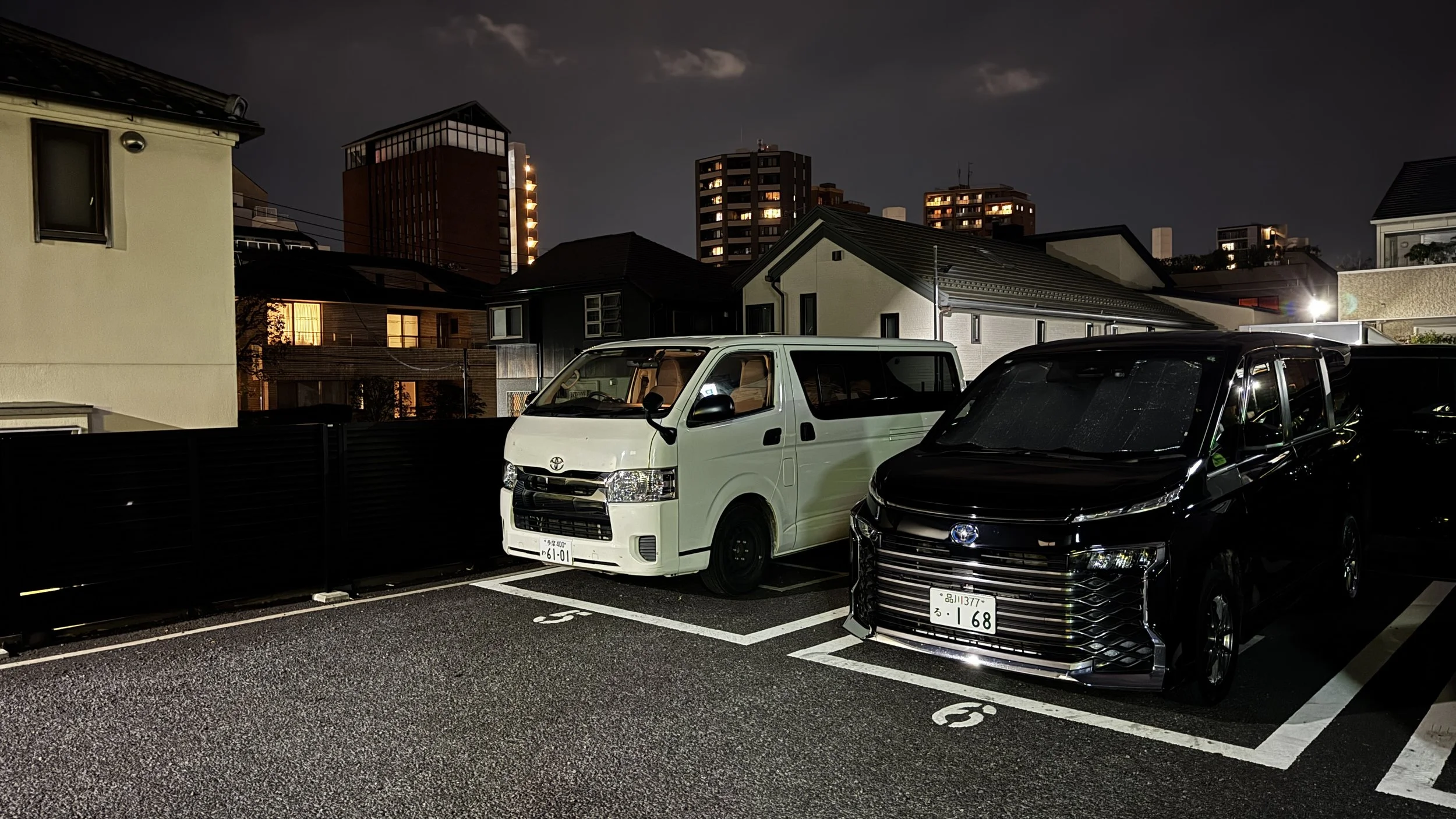
Tokyo and van life don't seem like they belong in the same sentence. Hotels are expensive, parking is tight, and there's no campground for kilometers. So when international travelers ask me whether they can really sleep in a campervan in central Tokyo, I understand the hesitation.
But here's the thing — I've spent the last decade in this industry. Five years running operations at Dream Drive, one of Japan's first campervan rental companies. Four national downhill mountain bike titles, which means I've slept in vehicles all over this country at race venues and trailheads. And now I run Motion Campervans, where I send international guests into Tokyo with one of our vans every week.
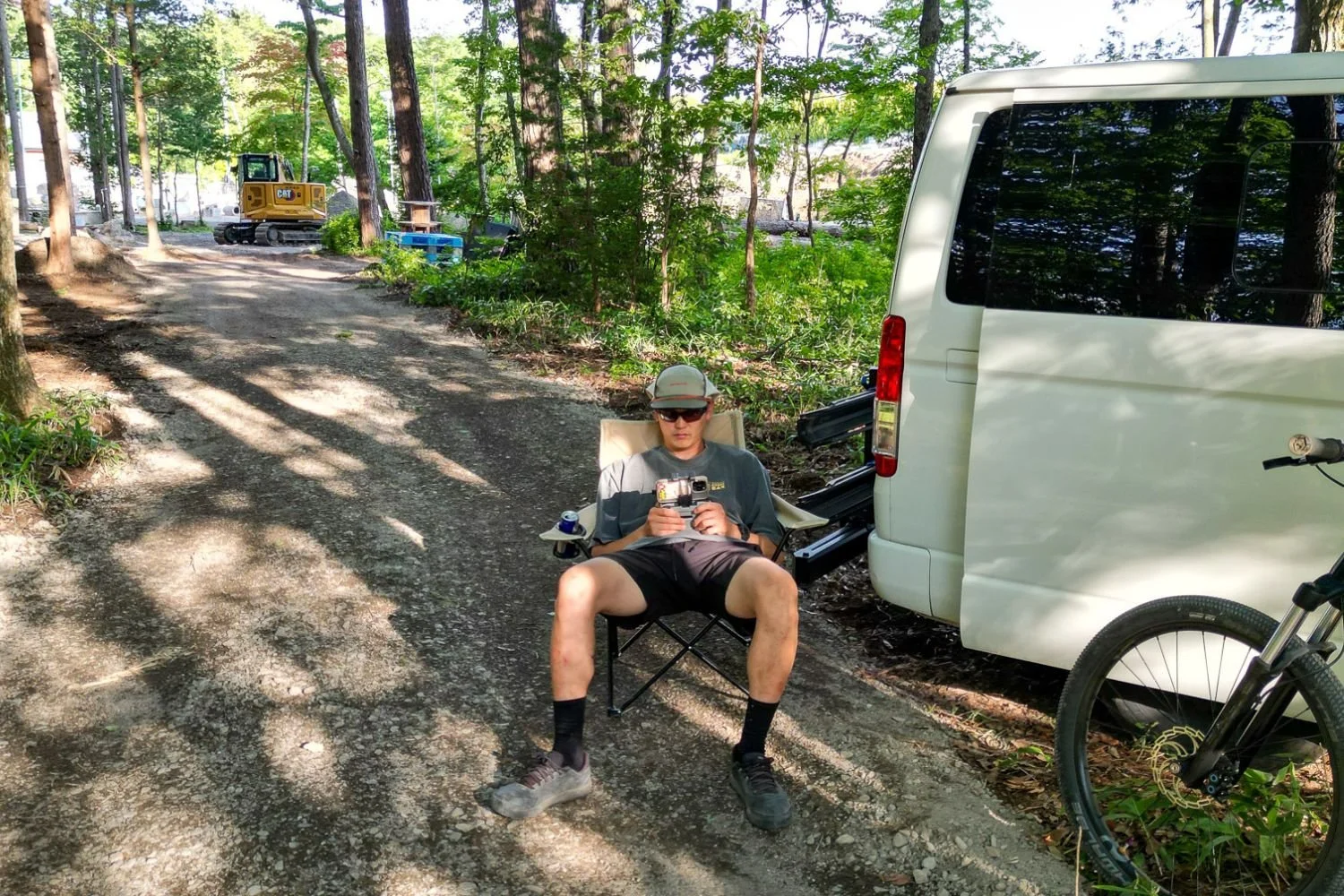
After years of van life across Japan, I’ve learned a few things—so I’m sharing what actually works.
Is it legal to sleep in a campervan in Tokyo?
Yes. There's no law in Japan that prohibits sleeping in your vehicle, in Tokyo or anywhere else.
This is genuinely different from many Western countries. In parts of New Zealand, the UK, the US, and Australia, "freedom camping" or sleeping in a non-designated area can result in fines that range from annoying to brutal. Japan has no equivalent.
What Japan does have is a strong cultural preference for staying in designated places. Most Japanese people who travel in vans use campgrounds or 道の駅 (*michi-no-eki*, roadside stations) for overnight stays. These are the most relaxed environments — quiet, with toilets, often with showers nearby.
But Tokyo doesn't have campgrounds in the 23 wards, and there are no michi-no-eki in central Tokyo. So if you want to actually sleep in the city, you'll be using coin parking lots. And that's completely fine — as long as you do it the right way.
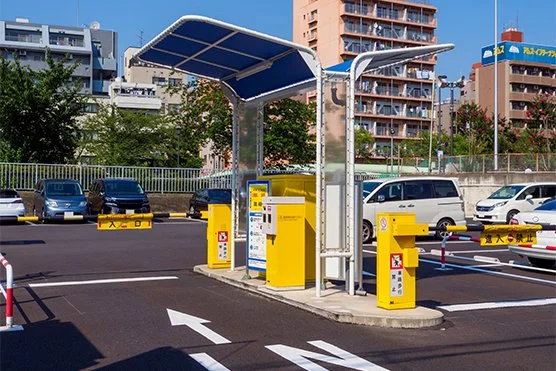
Coin parking lots are everywhere in urban Japan and are the key to overnight van stays in Tokyo.
What is a coin parking lot (コインパーキング)?
If you've never driven in Japan before, this concept will be new. So let me explain it properly, because it's the foundation of everything else in this guide.
コインパーキング (*koin pākingu*) are small, unmanned, pay-by-time parking lots that exist on virtually every block in urban Japan. They're not garages and they're not street parking — they're small open-air lots, usually squeezed between buildings, holding anywhere from 3 to 50 cars. In some neighborhoods, you'll also find multi-story facilities like the one below.
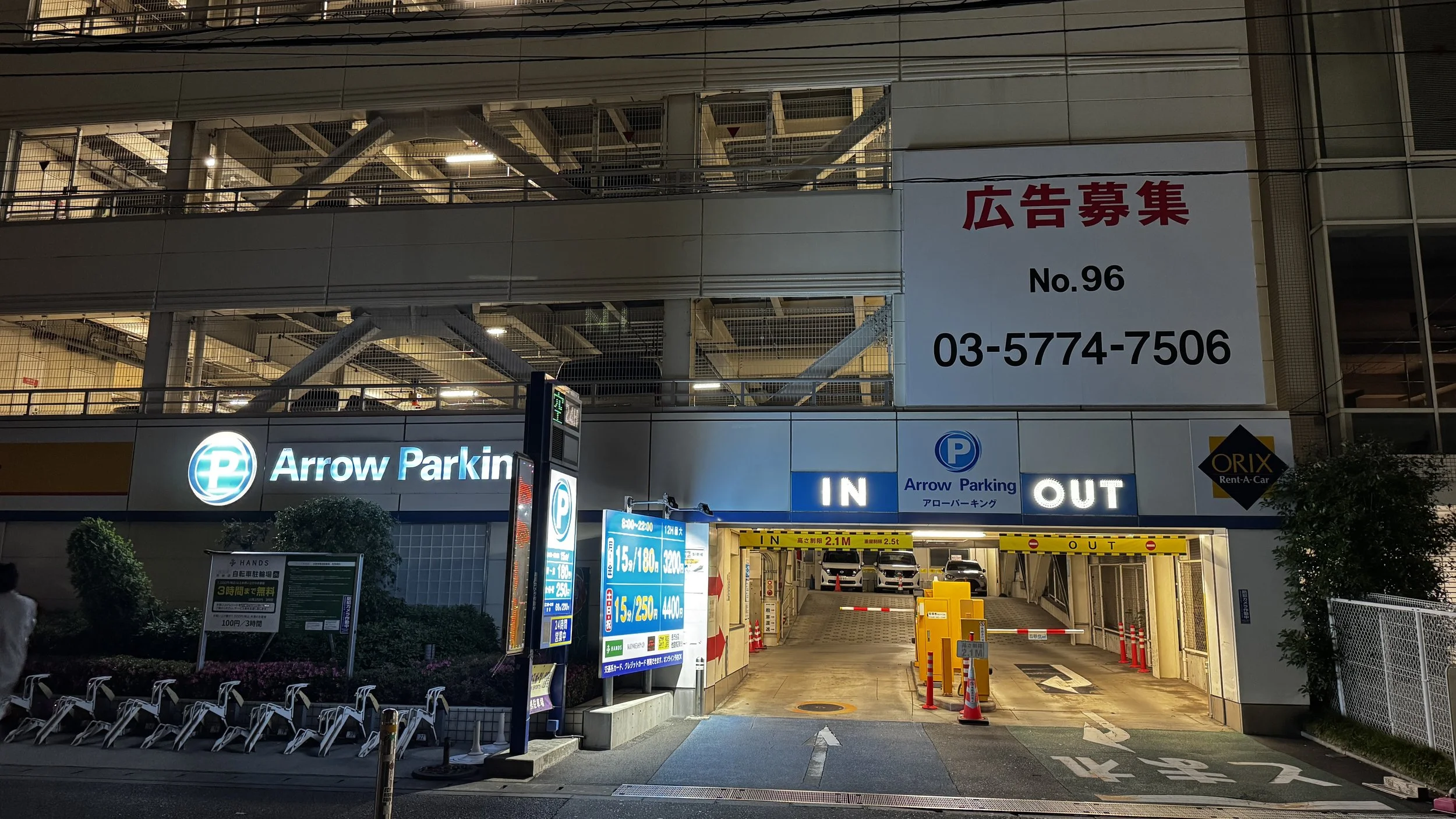
Multi-story coin parking can offer a quieter, covered place to park overnight.
Here's how they work
1. You drive into an empty space
2. A metal flap rises under your car and locks you in place (or a barrier gate stays down on multi-story lots)
3. The lot's billing system starts a timer
4. When you're ready to leave, you walk to the payment kiosk, enter your space number, pay the displayed amount in cash or by IC card (Suica, Pasmo) or credit card
5. The flap drops or the gate opens, and you drive out
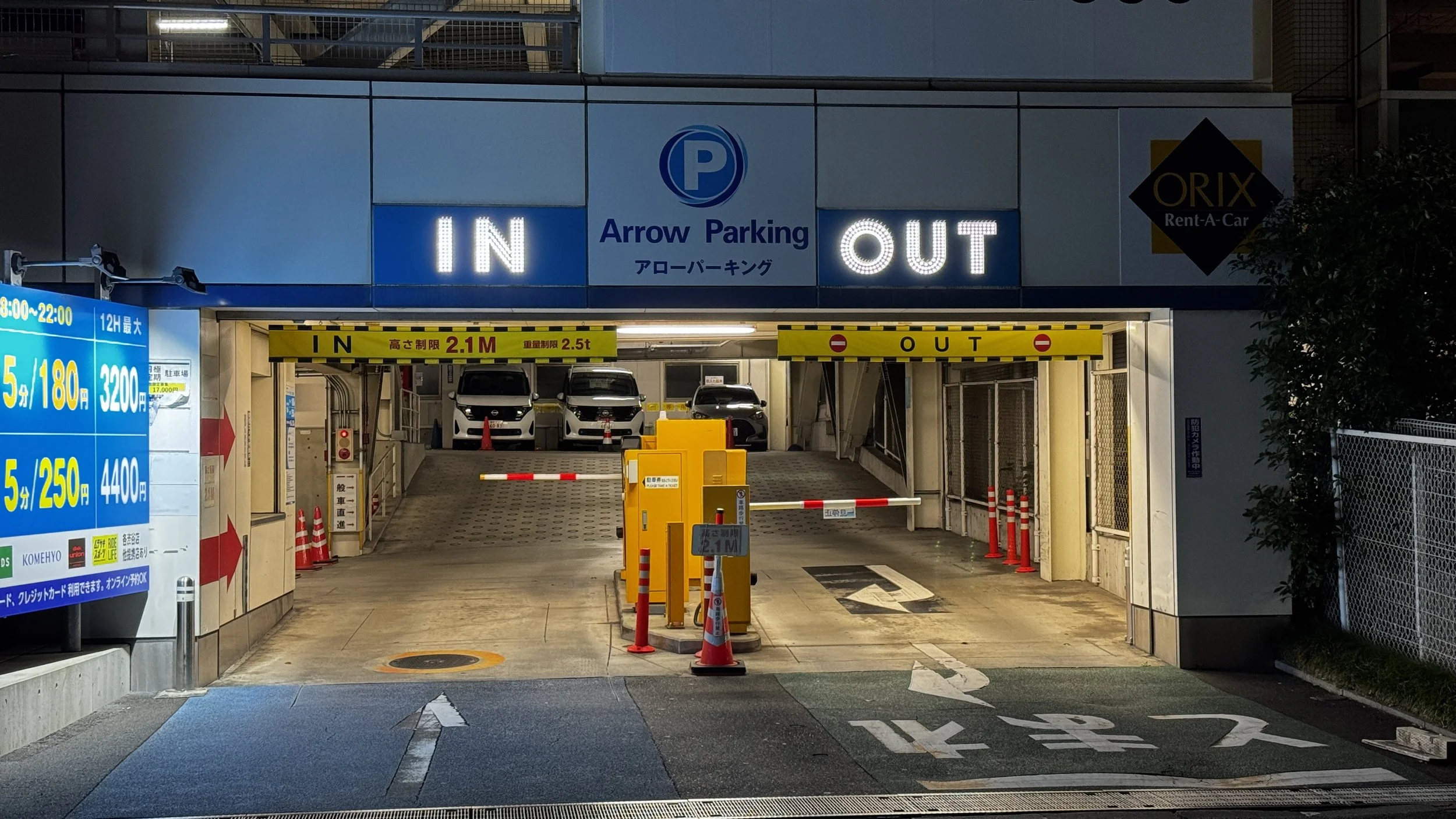
Always check the rates and height restriction before entering a Tokyo parking facility.
You'll see them under brand names like Times (タイムズ), Repark (リパーク), Mitsui Repark (三井のリパーク), Tokyu Park, Arrow Parking (アローパーキング), and SAN Park (SANパーク). Times is the largest network and has an app called Times Club that shows availability in real time. There's also akippa, a separate app that lets you reserve parking spaces in private lots in advance — useful for guaranteed central Tokyo spots on busy nights.
Rates: what you'll actually pay
Coin parking pricing has two parts: an hourly rate and (sometimes) a maximum daily rate. The hourly rate is usually shown for daytime and nighttime separately — nighttime is cheaper.
Rough nightly costs for sleeping in the van:
- Shibuya, Shinjuku, Roppongi, Ginza: ¥2,000–¥3,000 for 24 hours
- Less central Tokyo neighborhoods: ¥1,500–¥2,500
- Tokyo suburbs: ¥800–¥1,500
- Outside Tokyo: ¥500–¥1,500
The Tokyo van life secret: night-only maximum rates
Here's something most travelers never discover. Some coin parking lots have a special night maximum rate (夜間最大, yakan saidai) that's drastically cheaper than the 24-hour rate. We're talking ¥300–¥600 for an overnight stay from around 7 PM to 8 AM, even in central Shibuya.
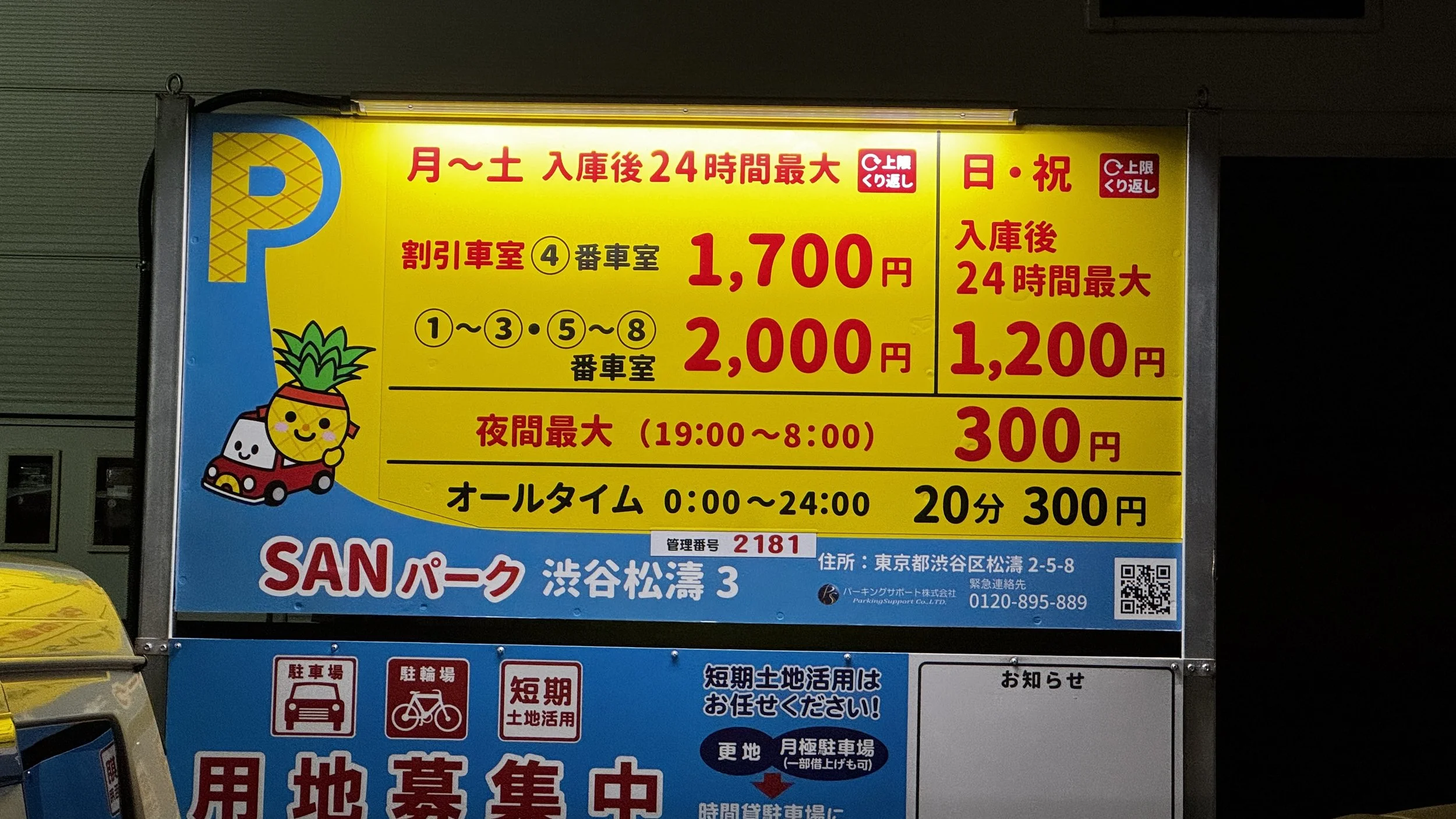
The Tokyo van life secret: this lot costs just ¥300 from 7 PM to 8 AM.
Read this sign carefully. The board shows ¥2,000 for a regular 24-hour stay — but ¥300 for night use only, from 19:00 to 8:00. That's the difference between a hotel-priced parking spot and a coffee-priced one. For sleeping in your van and being out by morning, the night rate is what you want.
These signs are written almost exclusively in Japanese, which is why most international visitors miss them. Look for these characters:
- 夜間最大 (*yakan saidai*) — night maximum
- The price next to it, usually ¥300–¥600
- The time window, usually starting between 18:00–22:00 and ending between 7:00–9:00
If you find a lot with this kind of pricing in your neighborhood, you've struck gold. Use it.
The maximum-rate trap (read this twice)
The opposite scenario also exists. Some coin parking lots have no maximum rate at all — the meter just runs by the hour, 24/7, with no cap.
If you park overnight at one of these, you can wake up to a ¥6,000+ bill for what should have been a ¥2,000 night. Always check the sign before pulling in. Look for the words 最大 or 打ち切り (*uchikiri*, cut-off). If you don't see them clearly displayed, drive to the next lot.
Height restrictions
Many coin parking lots have height bars set at 2.0m or 2.1m to keep larger vehicles out. You can see the "高さ制限 2.1M" sign clearly in the Arrow Parking photo above. All our vans are designed to fit under these standard bars, so it's rarely a problem in our vans — but always glance at the sign before pulling in.
How to choose a good coin parking lot for sleeping
This is where experience matters, because not all coin parking is created equal. I've slept in dozens of these lots across Tokyo, and the difference between a good night and a bad night comes down to lot selection.
Avoid lots facing major roads
A coin parking lot with three spaces directly on a major street like Meiji-dori, Yamate-dori, or Roppongi-dori is going to be loud. Trucks rumble through all night. People walk past at all hours. You'll hear every conversation, every drunk salaryman, every motorcycle.
Look for medium-to-large lots one block off the main streets
My favorite pattern is a lot with 30 to 40 spaces, set one block back from a major road, in a quieter neighborhood. You park toward the back, away from the entrance, and it's surprisingly dark and quiet. In Tokyo. Genuinely. Multi-story indoor parking lots are even better — you get a roof, security cameras, and complete protection from rain or noise.
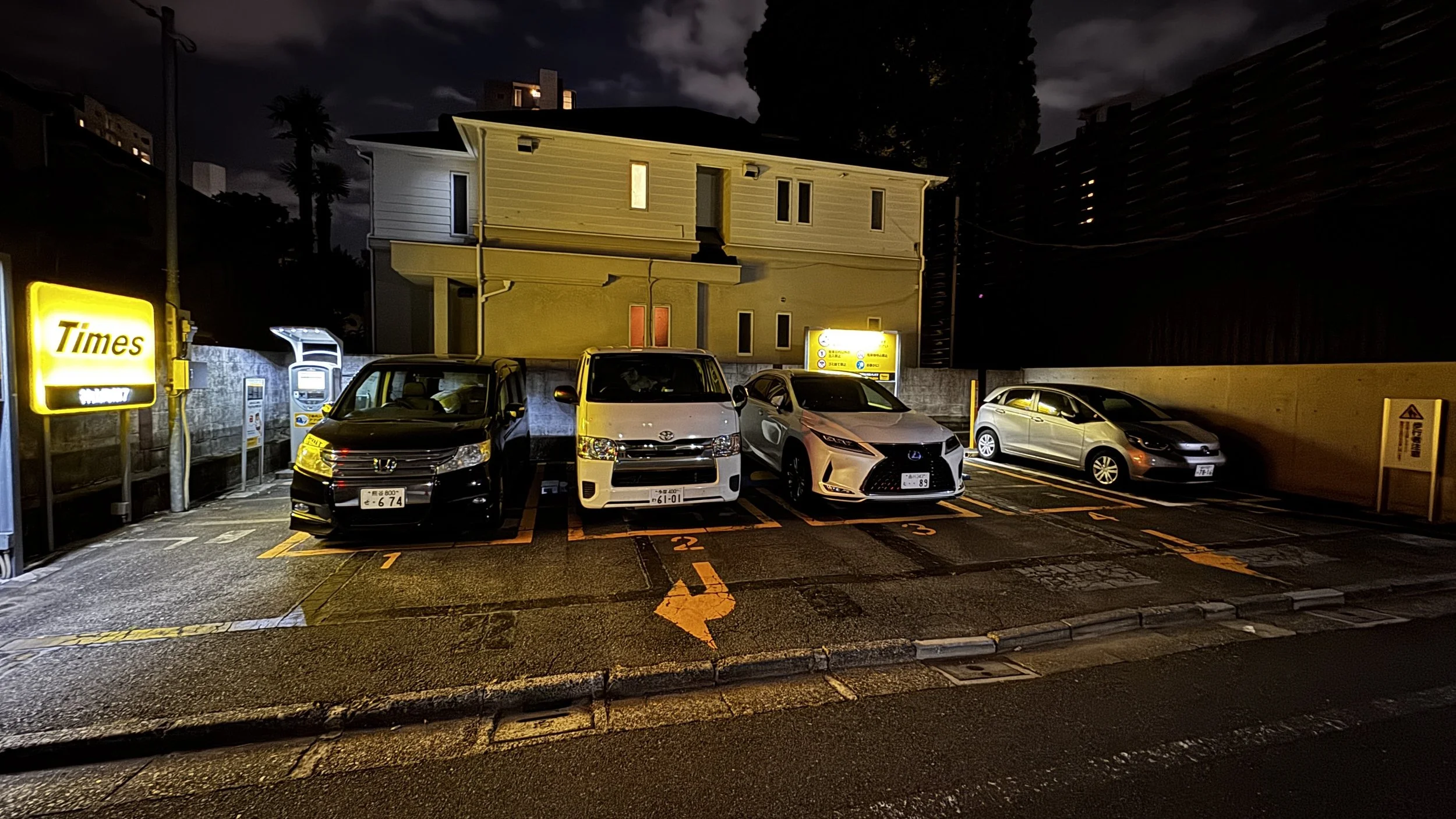
A small, quiet parking lot away from the main road can make a surprisingly comfortable overnight base.
These lots exist closer to Shibuya than you'd expect. I've spent nights in lots like this within a 10-minute walk of Shibuya Station, and slept fine.
Move toward residential neighborhoods
The trick is to stay close enough to the action that you can walk back from dinner, but far enough that you're not parked next to a club. Some specific Tokyo neighborhoods I'd recommend for overnight parking:
- Tomigaya (富ヶ谷) — quiet residential streets just behind Yoyogi Park, walking distance to Shibuya and Harajuku
- Yoyogi-Hachiman (代々木八幡) — cafés and small restaurants, easy access to central Tokyo
- Sasazuka (笹塚) — residential, several coin parking lots, one Keio Line stop from Shinjuku
- Hatagaya (幡ヶ谷) — relaxed, has Kannon-yu sento with an outdoor bath
- Hatsudai (初台) — quieter side of Shinjuku, multiple parking options
- Backstreets of Ebisu (恵比寿) — once you walk a few blocks away from the station
- Shoto (松濤) — wealthy residential neighborhood with excellent coin parking, 8 minutes from Shibuya Station
- Nakameguro residential streets (中目黒) — beautiful in cherry blossom season, walking distance to Daikanyama
This is what those residential streets feel like at night — quiet enough that the only sound is your engine cooling:
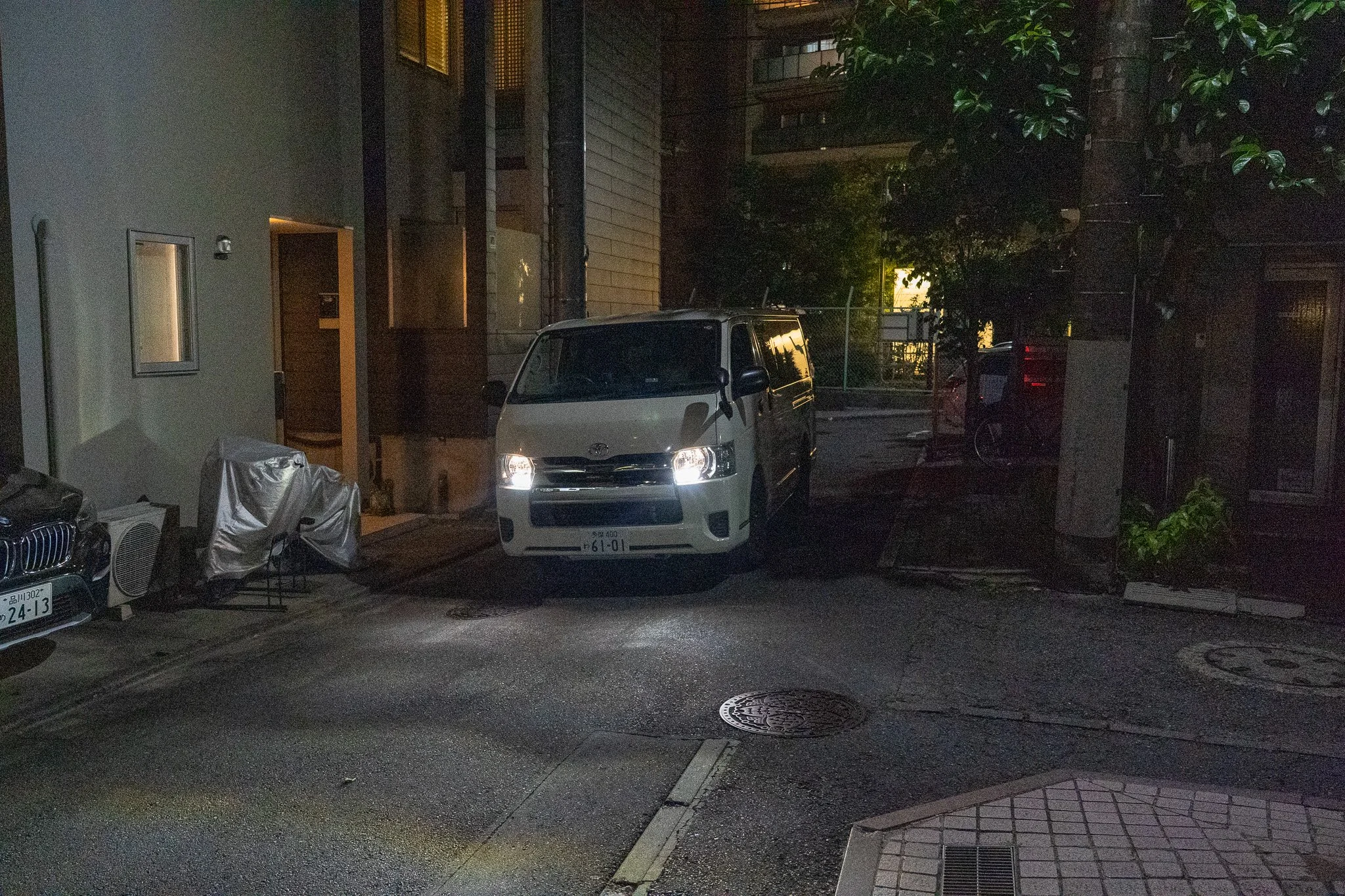
Head a few blocks into a residential neighborhood and Tokyo quickly becomes calm and quiet.
Avoid these areas at night
If you park in or directly next to these zones, you're asking for a noisy, weird night:
- Kabukicho (歌舞伎町) in Shinjuku — Tokyo's biggest nightlife district
- Roppongi crossing and the streets directly south — clubs and bars until 5 AM
- Center Gai (センター街) in Shibuya — drunk crowds spilling out late
- Dogenzaka (道玄坂) — busy traffic, neon, restaurants serving until early morning
- Ueno's Ameyoko area at night — gets rough after midnight
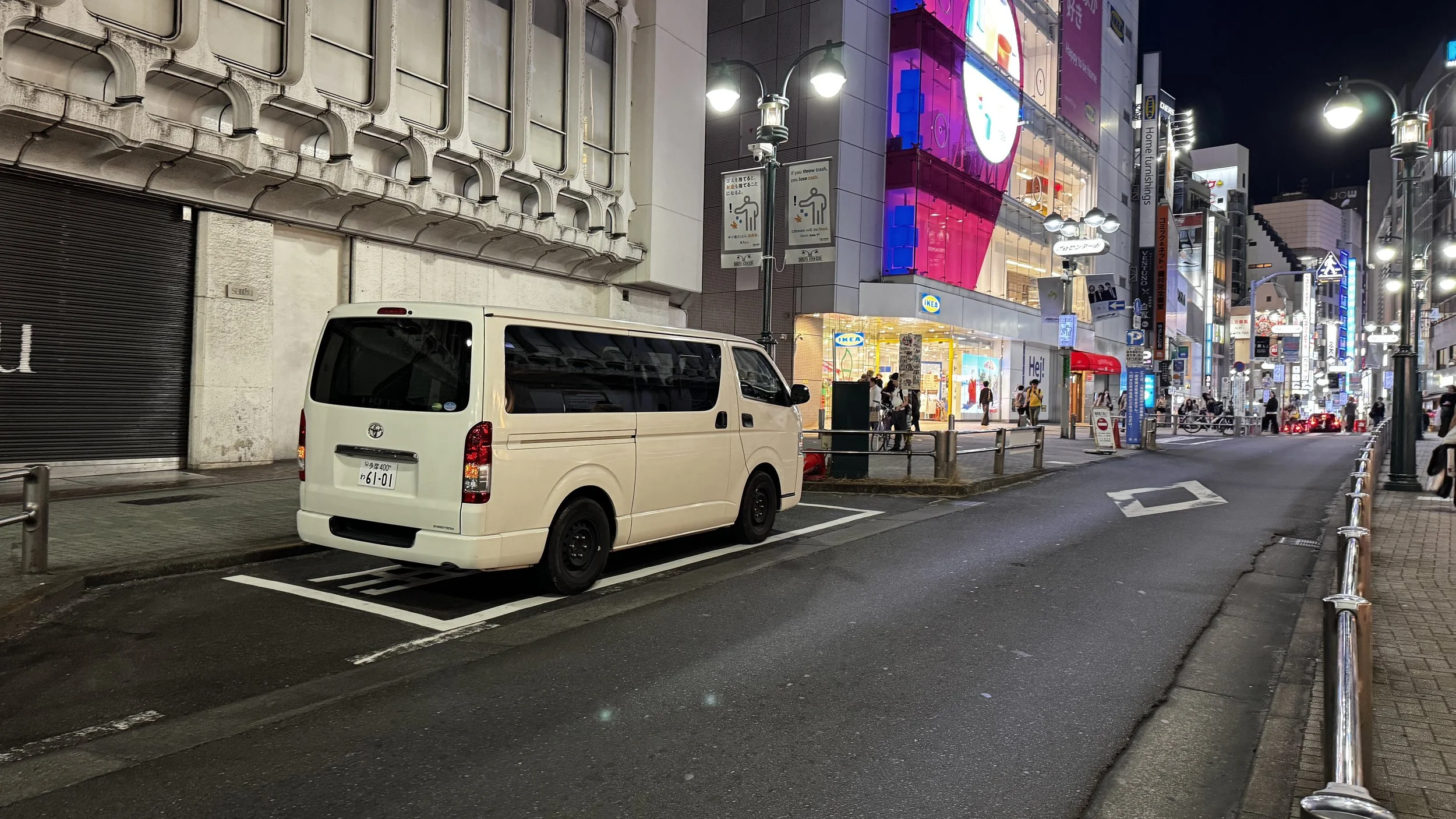
Great for sightseeing, not so great for sleeping—avoid parking beside Tokyo’s busiest nightlife areas.
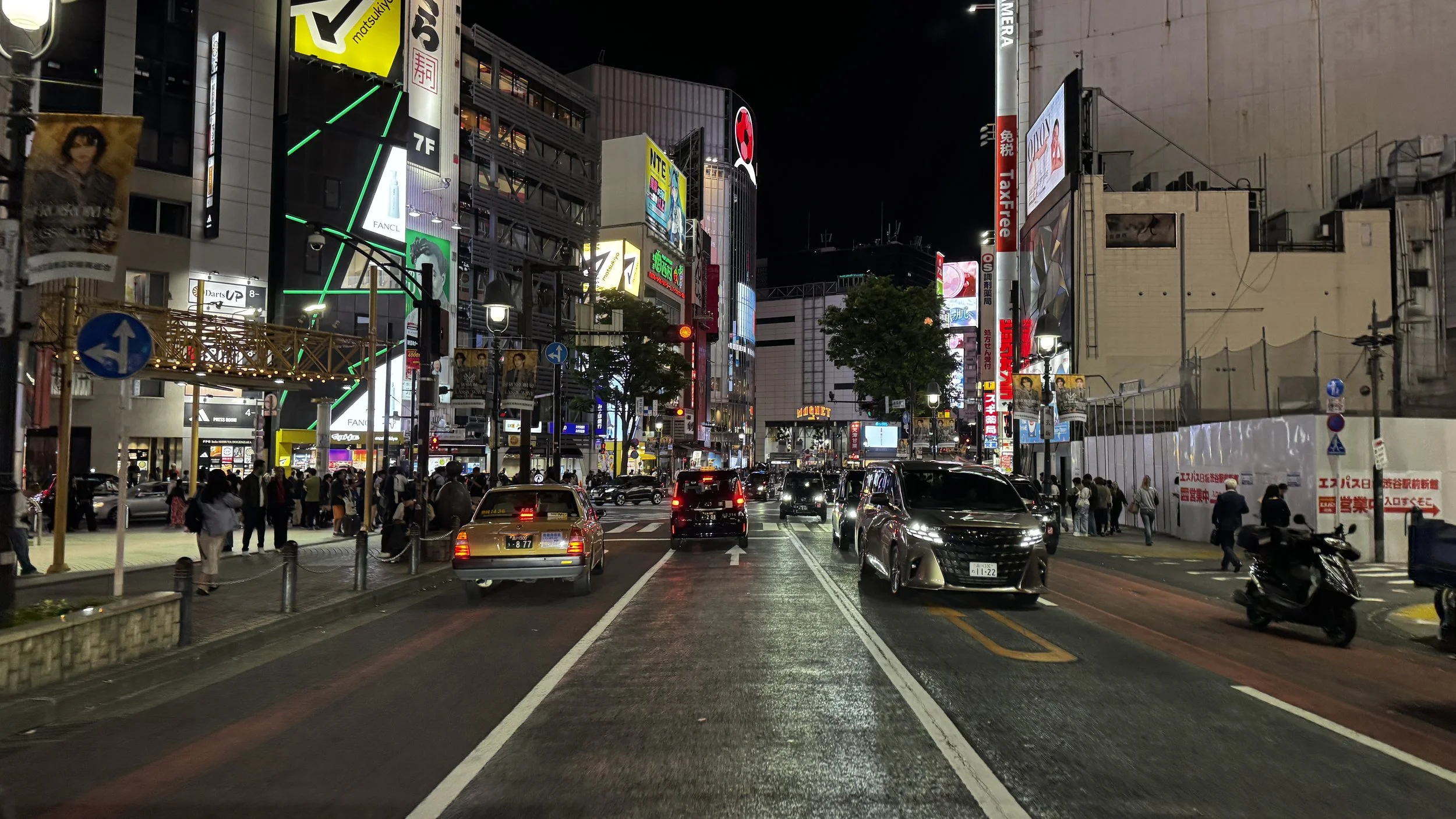
You can sightsee in these places. Just don't sleep next to them.
Toilet strategy: the make-or-break problem
This is where most international van travelers get caught off guard. Coin parking lots have no toilets. You need a plan.
Public park toilets — The Tokyo Toilet project
Tokyo has invested heavily in beautiful public toilets in recent years — there's an entire architecture project called The Tokyo Toilet that put 17 world-class designers on park bathroom buildings in Shibuya ward. Yoyogi-Hachiman Park has the Three Mushrooms toilet by Toyo Ito. Nabeshima Shoto Park has a five-hut design by Kengo Kuma. Yoyogi Fukamachi Mini Park has the famous transparent toilets by Shigeru Ban that turn opaque when locked.
These are 24-hour, free, beautifully designed, and clean.
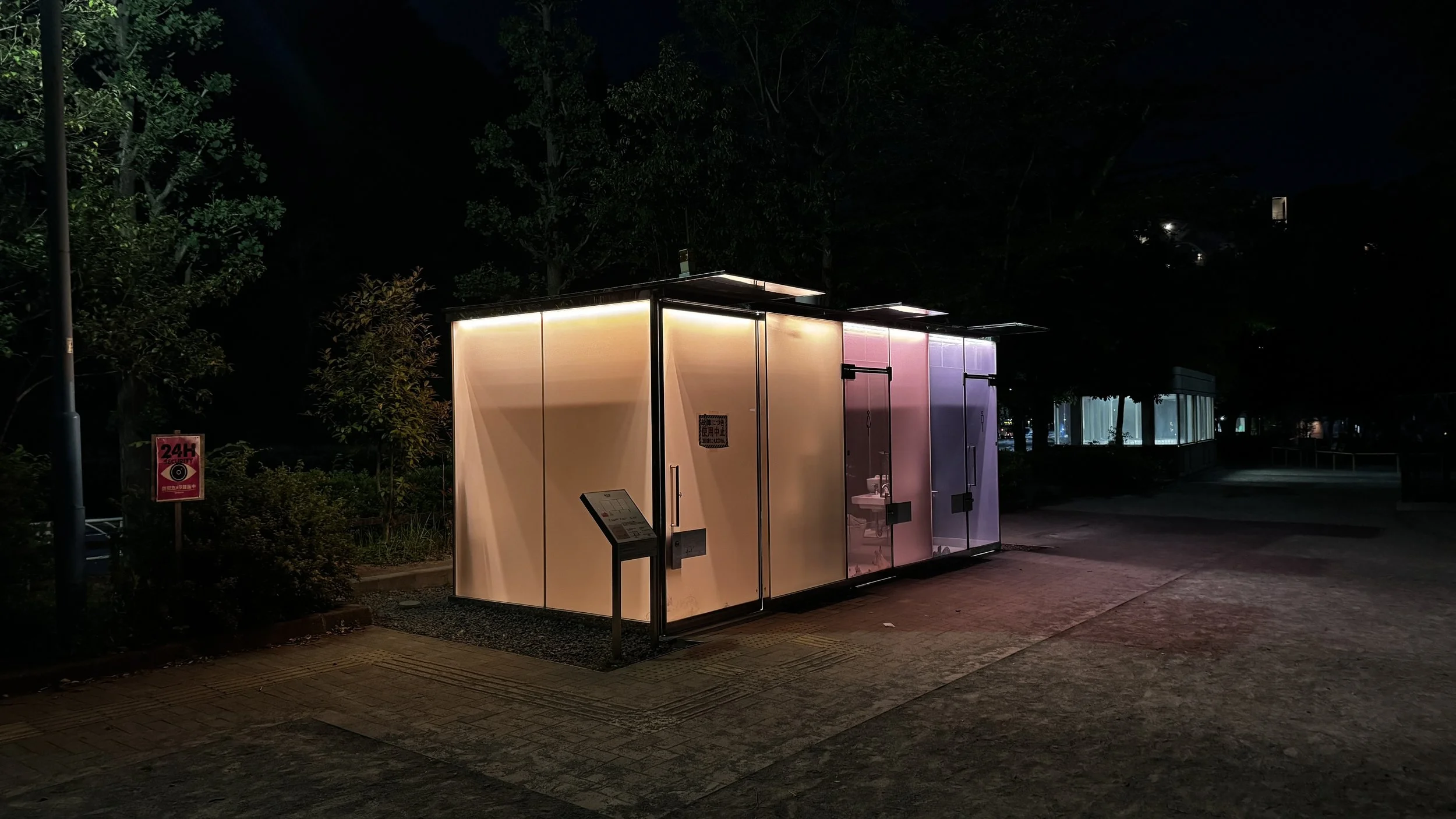
Tokyo’s beautifully designed public toilets are free, clean and often open 24 hours.
A go-to combination of mine: park in a coin lot in Tomigaya or Shoto, walk three minutes to one of these designer toilets for evening prep — brushing teeth, washing face. It works.
Convenience stores (konbini)
Lawson, FamilyMart, and 7-Eleven generally offer customer toilets. In suburban and rural Japan, almost all of them do. In central Tokyo, many konbini have locked their bathrooms because of overuse, vandalism, and lack of staff to clean them. Always check before assuming. A polite small purchase (¥150 onigiri, a bottle of water) is the etiquette either way.
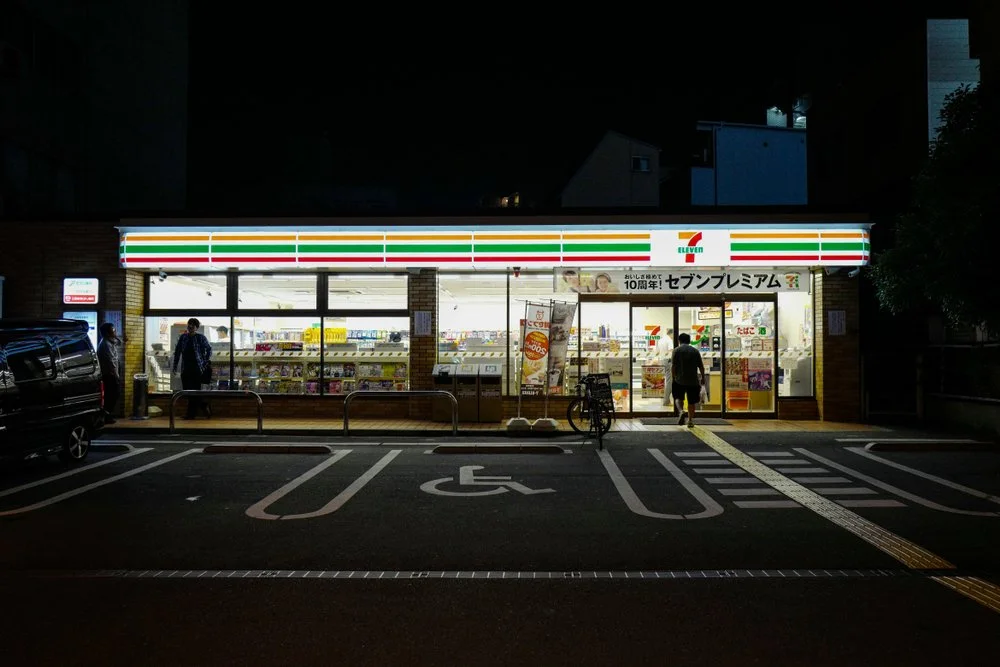
Convenience stores are useful for food, drinks and sometimes toilets—but facilities vary in central Tokyo.
24-hour family restaurants
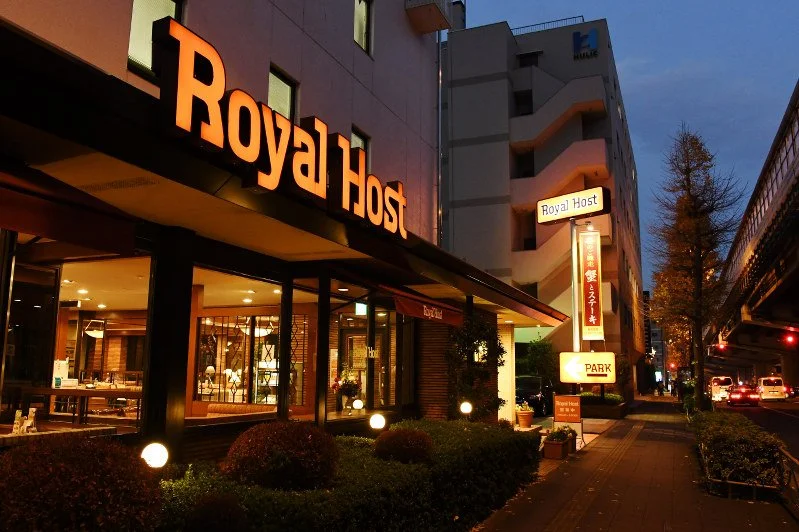
Denny's, Gusto, Saizeriya, Sukiya, Royal Host. Open all night, clean toilets, and you can sit down for a coffee at 2 AM if you can't sleep. A reliable backup.
Train station toilets
Open during station hours (roughly 5 AM to 1 AM). Generally clean. Useful in the morning.
What you can do inside the van
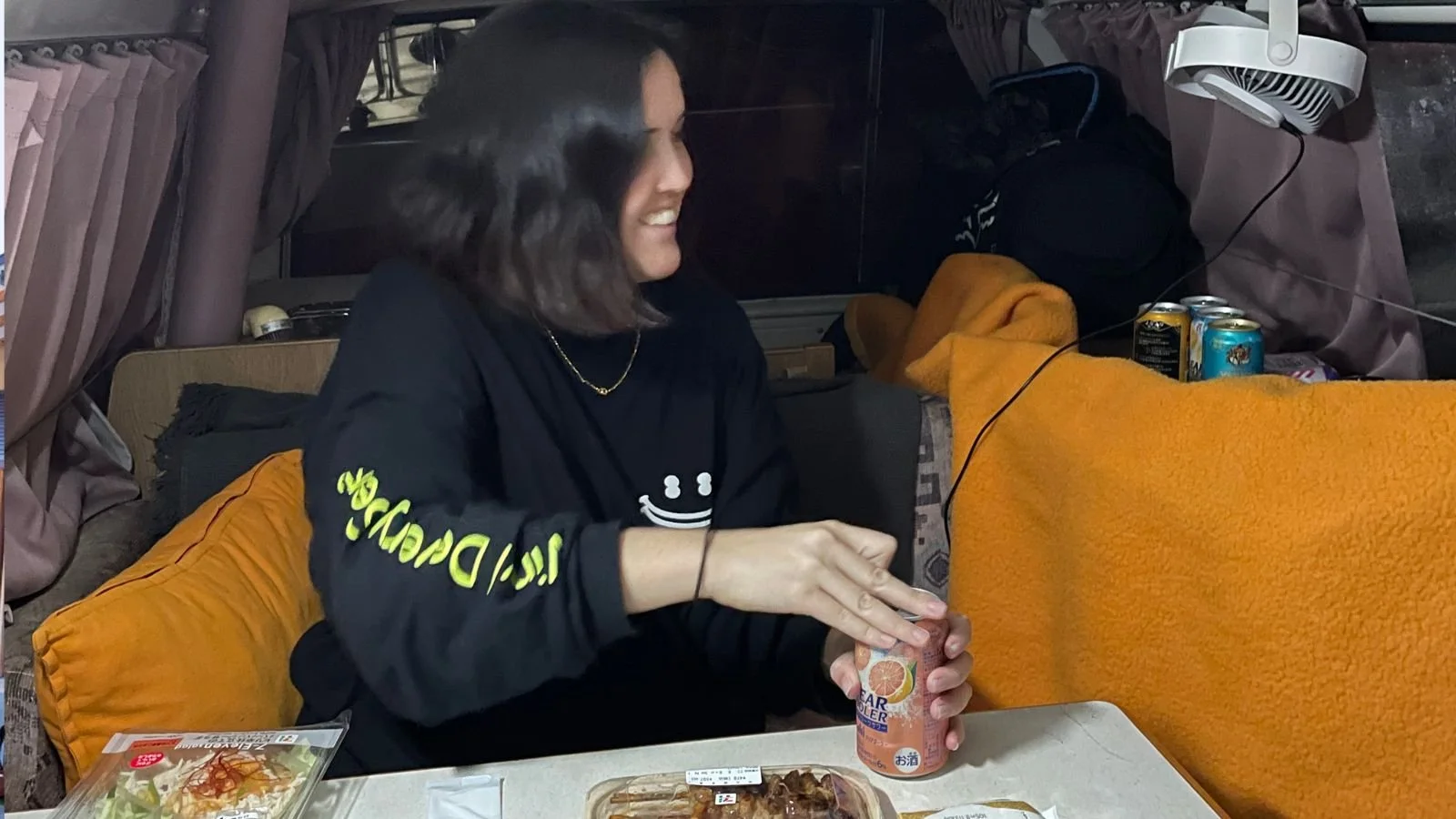
Brushing teeth, washing your face, changing clothes — all fine inside the van using our water tank. Just be discreet, close the door, don't put a mirror up on the dashboard.
What you absolutely cannot do
Urinating in the corner of the parking lot, behind the van, on a wall — this is the fastest way to get reported in Japan, and it can lead to a police visit. Don't. It's not a cultural soft no. It's a hard no.
Shower strategy: sento, onsen, gyms, and manga cafés
You've sorted parking and toilets. Now: how do you get clean?
Sento and onsen near Shibuya
Public baths are the most fun option. Cheap, cultural, and there's one in every neighborhood. Around Shibuya specifically:
- Shibuya SAUNAS — three minutes from Shibuya Station, modern, sauna-focused, tattoo friendly
- Bunka Yokusen (文化浴泉) — around ¥800 covers bath, sauna, towel, and shampoo, English reception
- Minami Aoyama Shimizu-yu (清水湯) — Omotesando area, classic sento with jet pools and sauna
- Kannon-yu (観音湯) in Hatagaya — has a rare outdoor bath (*rotenburo*)
- Kairyou-yu (改良湯) between Shibuya and Ebisu — traditional sento opened in 1916, renovated 2018, tattoo friendly
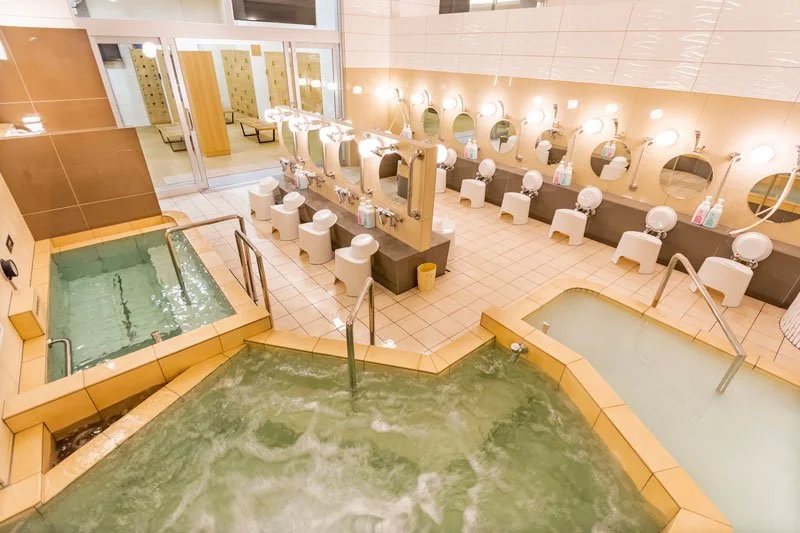
Most charge ¥550–¥1,000. Bring your own towel to save a few hundred yen, or rent one at the counter.
A tip for routing the day: park your van first, then walk to a sento, then walk to dinner, then back to the van to sleep. Or the reverse: shower at a sento in the suburbs before driving into central Tokyo for dinner, then sleep in the van. Both flows work.
Etiquette quick reference: shoes off at the entrance, wash thoroughly before getting in the bath, no swimwear, full nudity is normal, small towel out of the water, no loud talking.
Gym memberships
If you're a member of an international gym chain — Anytime Fitness, Gold's Gym, World Gym — you can use their Tokyo branches for showers. Anytime Fitness in particular has dozens of 24-hour locations across the city and is genuinely useful for van travelers. Membership reciprocity varies, so check with your home branch before flying out.
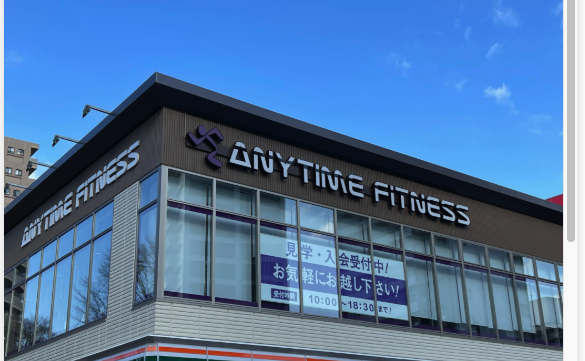
ANYTIME FITNESS WITH seven eleven is nice combo!
Manga cafés / internet cafés
This one needs explanation, because it's uniquely Japanese.
Manga kissa (漫画喫茶) or internet cafés (ネットカフェ) are 24-hour facilities where you rent a small private booth by the hour. They were originally designed for reading manga and using the internet, but today they function as ultra-budget overnight stays for people who miss the last train. Major chains include Kaikatsu Club (快活CLUB), Jiyu Kukan (自遊空間), and Manboo (マンボー).
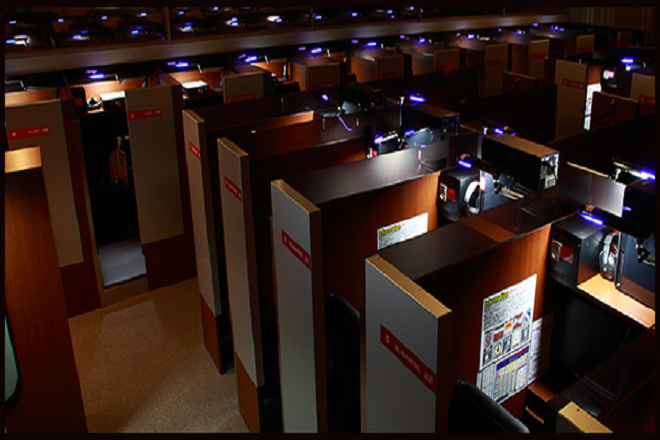
Why van travelers care: most of them have showers you can use for around ¥300–¥500. Plus unlimited soft drinks, snacks, and a reclining chair if you want a break from the van for a few hours. Many locations also have private booths with flat mats if you ever need an indoor backup.
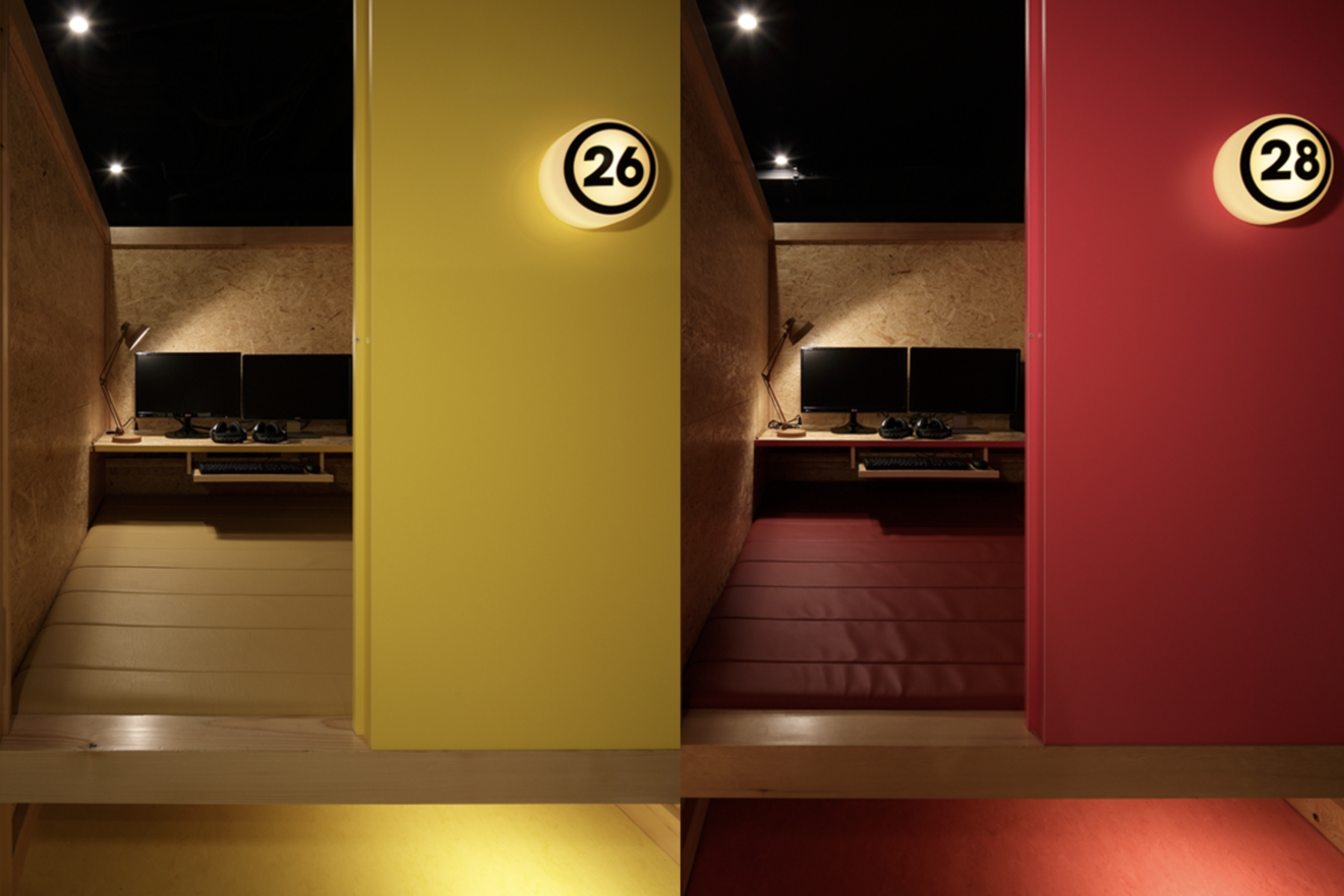
MANGA CAFÉ BOOTH — TO SHOOT]
You'll find at least a few manga cafés near every major Tokyo station. It's one of the most reliable shower-and-recharge options in the city.
A typical Tokyo van life day
Here's what a smooth day actually looks like:
- Morning: Wake up in your coin parking lot. Brush teeth and wash face using the van's water tank. Walk to a nearby park toilet or konbini.
- Day: Move the van to a sightseeing area (or leave it parked if your lot's daytime rates are reasonable — check the max rate). Use Tokyo's incredible train network for the city itself.
- Evening: Hit a sento for a real shower. Walk to dinner. Walk back to the van.
- Night: Sleep with the AC on if it's hot. Doors locked. Windows cracked for airflow if needed.
- Repeat or relocate: Many guests do 1–2 nights in Tokyo, then drive out toward Hakone, Mount Fuji, or the Izu Peninsula for the rest of the trip.

DAY-IN-LIFE GRID — TO SHOOT]
─────────────────────────────────────────────
Other practical details: the unwritten rules
─────────────────────────────────────────────
Most Tokyo coin parking lots post a small sign with house rules. They cover the same handful of points every time, and following them keeps you out of trouble:
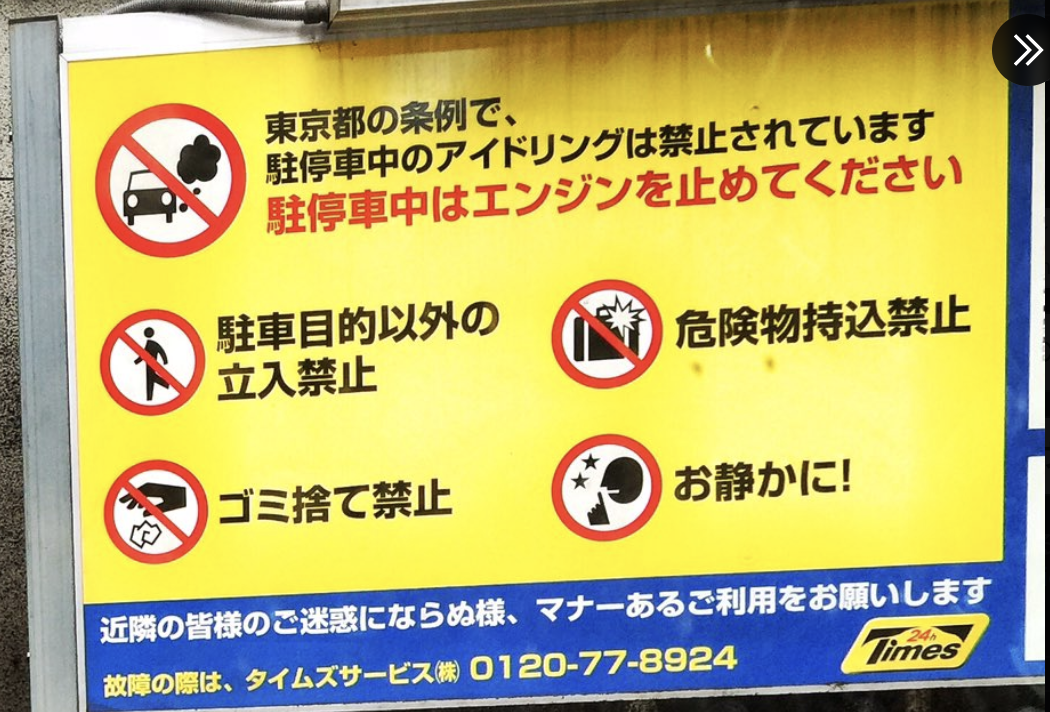
PARKING RULES SIGN
No idling (アイドリング禁止). Tokyo has an anti-idling ordinance, and running your engine all night to power the AC is against the rules (and would wake your neighbors anyway). Our vans have house batteries that run the AC, lights, fridge, and USB ports independently of the engine. So you can sleep with everything running, no idling required.
No garbage (ゴミ捨て禁止). Don't leave trash at the coin parking lot. Bag it and dispose of it at a konbini (most have customer trash bins) or bring it back to us at rental return.
Keep quiet (お静かに). Don't slam doors, don't play music outside, don't have loud conversations next to the van late at night. Sleeping inside is fine. Being a noisy neighbor is not.
─────────────────────────────────────────────
FAQ
─────────────────────────────────────────────
Is it legal to sleep in a van in Tokyo?
Yes. There's no Japanese law against sleeping in your vehicle. Just don't set up camping gear on the street.
How much does overnight parking cost in Shibuya?
Roughly ¥2,000–¥3,000 for 24 hours in central Shibuya, but if you find a lot with a "night maximum" rate (夜間最大), you can pay as little as ¥300–¥600 for an overnight stay.
Can I park my campervan anywhere overnight in Tokyo?
Not anywhere — you need to use a coin parking lot (or a private reserved spot via apps like akippa). Street parking overnight is not allowed.
Where can I shower while van camping in Tokyo?
Public baths (sento), modern hot spring facilities (super sento), gym memberships, or manga cafés. Sento charge around ¥550–¥1,000.
Are there campgrounds in central Tokyo?
No. The nearest proper campgrounds are 60+ minutes outside the city. Inside Tokyo, you'll use coin parking lots.
Can I cook outside the van in a Tokyo parking lot?
No. Don't set up any visible camping gear in central Tokyo. Cooking is fine at proper campgrounds or some michi-no-eki outside the city.
Can I run the AC overnight without idling the engine?
Yes. Our vans have a house battery system that runs AC, lights, fridge, and charging independently of the engine.
What's a michi-no-eki and where can I find one near Tokyo?
Michi-no-eki are free government-supported roadside stations with toilets and parking. None exist in central Tokyo, but you'll find dozens just outside the city in places like Okutama, Chichibu, and along the route to Mount Fuji.
Is Tokyo safe for solo van travelers?
Yes. Tokyo is one of the safest major cities in the world. Standard precautions apply, but van travel here is genuinely low-risk.
What's the best month for a Tokyo van trip?
Late April through early June, and October through November. Avoid Golden Week (late April to early May) for traffic. July and August are humid but workable with AC. Winter is dry and great for hot springs.
Ready to try it?
Motion Campervans rents Japan-spec campervans built specifically for trips that mix Tokyo with the countryside beyond. If you're thinking about a trip that includes the city, get in touch — I'll personally help you plan your route, parking spots, and shower stops.
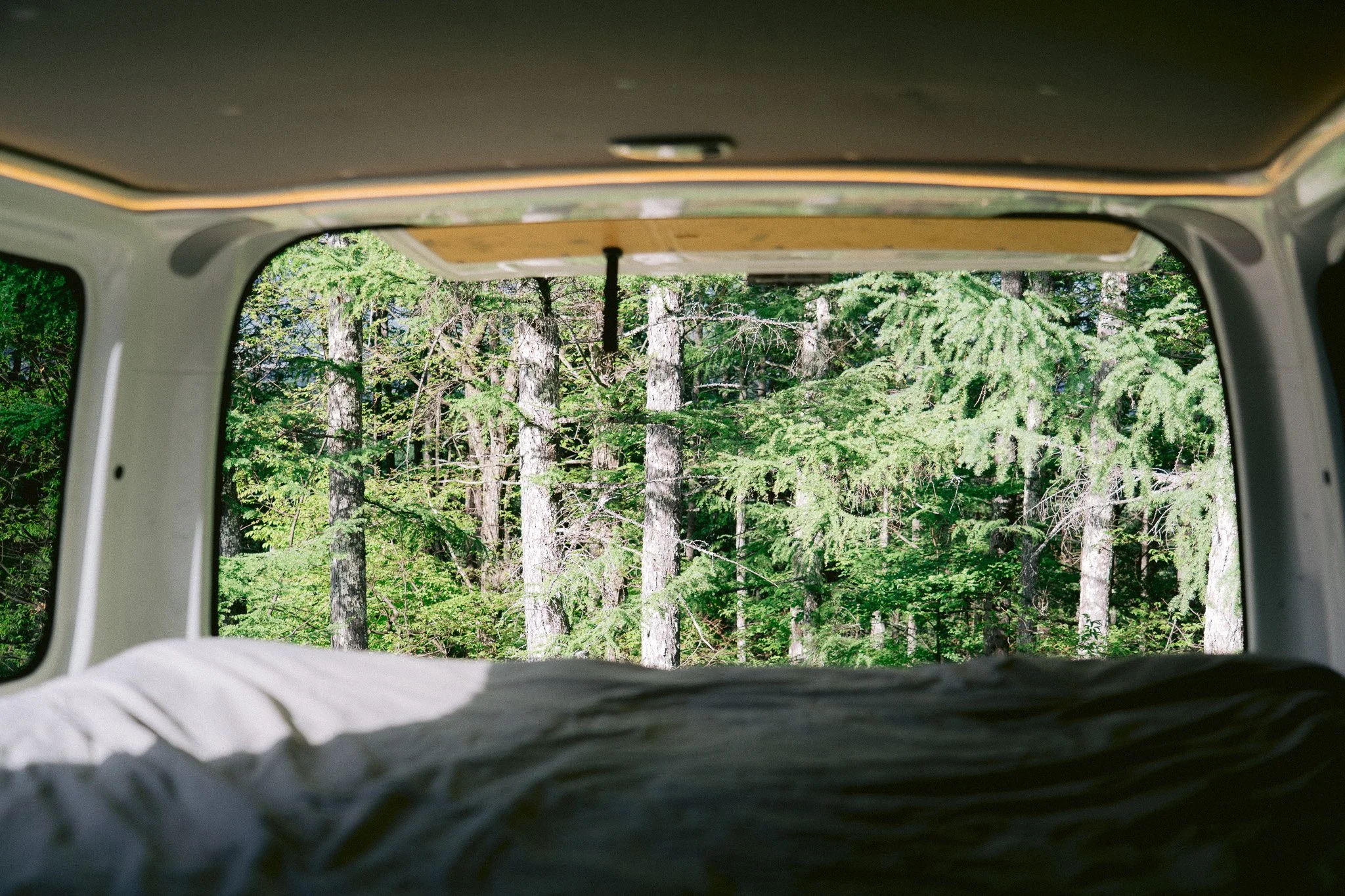
Home is where you park it.
─────────────────────────────────────────────
[Bio]
Hajime Imoto is the founder of Motion Campervans and a four-time Japan Downhill National Champion. He's spent over a decade in the campervan industry and lives between Tokyo and Nagano.