
How to Shower on a Japan Campervan Trip — And Why Onsen Will Change How You Travel
One of the first questions people ask before a Japan campervan trip is: "How do I shower?"
The honest answer: it's easier than you think. Japan has one of the best bathing infrastructures in the world, and once you understand how to use it, staying clean on the road becomes one of the highlights of the trip — not a hassle.
Here's every option available to you.
Every Way to Stay Clean on a Japan Campervan Trip
Onsen & Sento — The Best Option (More on This Later)
Japan has over 3,000 natural hot springs across the country. Most are open to day visitors for a small fee, usually between ¥500 and ¥1,500. You don't need to be staying at a hotel to use them — just show up, pay at the counter, and soak.
Sento are traditional public bathhouses found in cities and towns. They use heated tap water rather than natural spring water, but the experience is similar. Prices are typically ¥500–¥700 — the most affordable option on this list.
Both are genuinely excellent. More on why below.
Super Sento — Best for Tattoos
Super Sento are large commercial bath facilities found in suburban areas across Japan. Think of them as an upgraded public bath: multiple pools at different temperatures, saunas, relaxation rooms, restaurants, and sometimes even massage services. Prices are typically ¥800–¥1,200.
The key advantage for foreign travelers: Super Sento are generally more tattoo-friendly than traditional onsen. Many have adopted open policies or allow entry with tattoos covered. If you have tattoos and aren't sure about smaller onsen, Super Sento is the safe bet.
Manga Cafes — The Urban Backup
In cities, manga cafes (internet cafes) are a 24-hour option for a quick shower. Most charge around ¥200–¥300 for shower access, and you can be in and out in 15 minutes. They're not scenic, but they're everywhere — even in smaller cities — and they never close. Useful for late arrivals into urban areas when everything else is shut.
Highway Service Area Showers
Some highway service areas along Japan's expressways have coin-operated showers available. On major routes like the Chuo Expressway you'll find them at larger SA facilities. Good for a quick rinse when you're making distance and don't want to detour. Worth checking the SA's website before relying on this option.
Gym Day Passes
Anytime Fitness locations across Japan offer day passes for non-members, and your home country membership sometimes works too. At around ¥1,000–¥1,500 for a day pass, you get shower access plus equipment if you want it. Available in most mid-sized cities.
Private Onsen (貸切風呂) — The Best Option for Couples with Tattoos
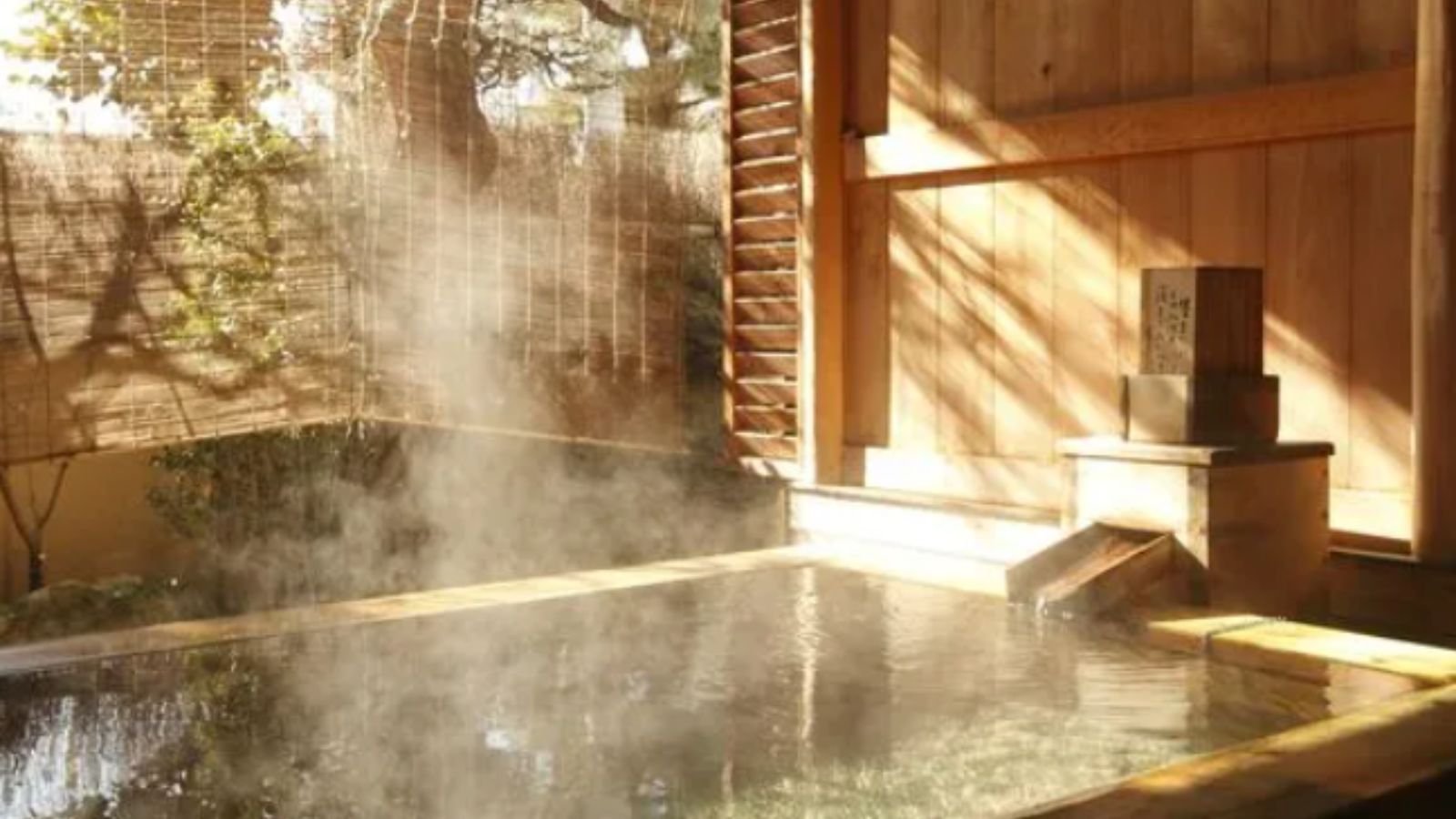
If you have tattoos and want the full onsen experience without worrying about policies, a private onsen (貸切風呂, kashikiri buro) is the answer. You rent the entire bath for 45–60 minutes, just the two of you. No shared space, no rules about tattoo coverage, complete privacy. Cost is typically ¥3,000–¥5,000 for the session.
A great example near our Nagano routes is Shinshu Shimosuwa Onsen Gingetsu (信州しもすわ温泉 ぎん月) in Suwa. This facility offers private onsen rental in a beautiful traditional setting — ideal for couples who want the full onsen experience on their own terms.
Open 11am–3pm (last entry 2pm). Reservations recommended. Tel: 0266-27-5011.
If you're new to onsen culture and feeling uncertain about the etiquette, starting with a private bath is a great way to ease in — no pressure, no crowds, just the experience itself.
Why Onsen is Better Than a Shower
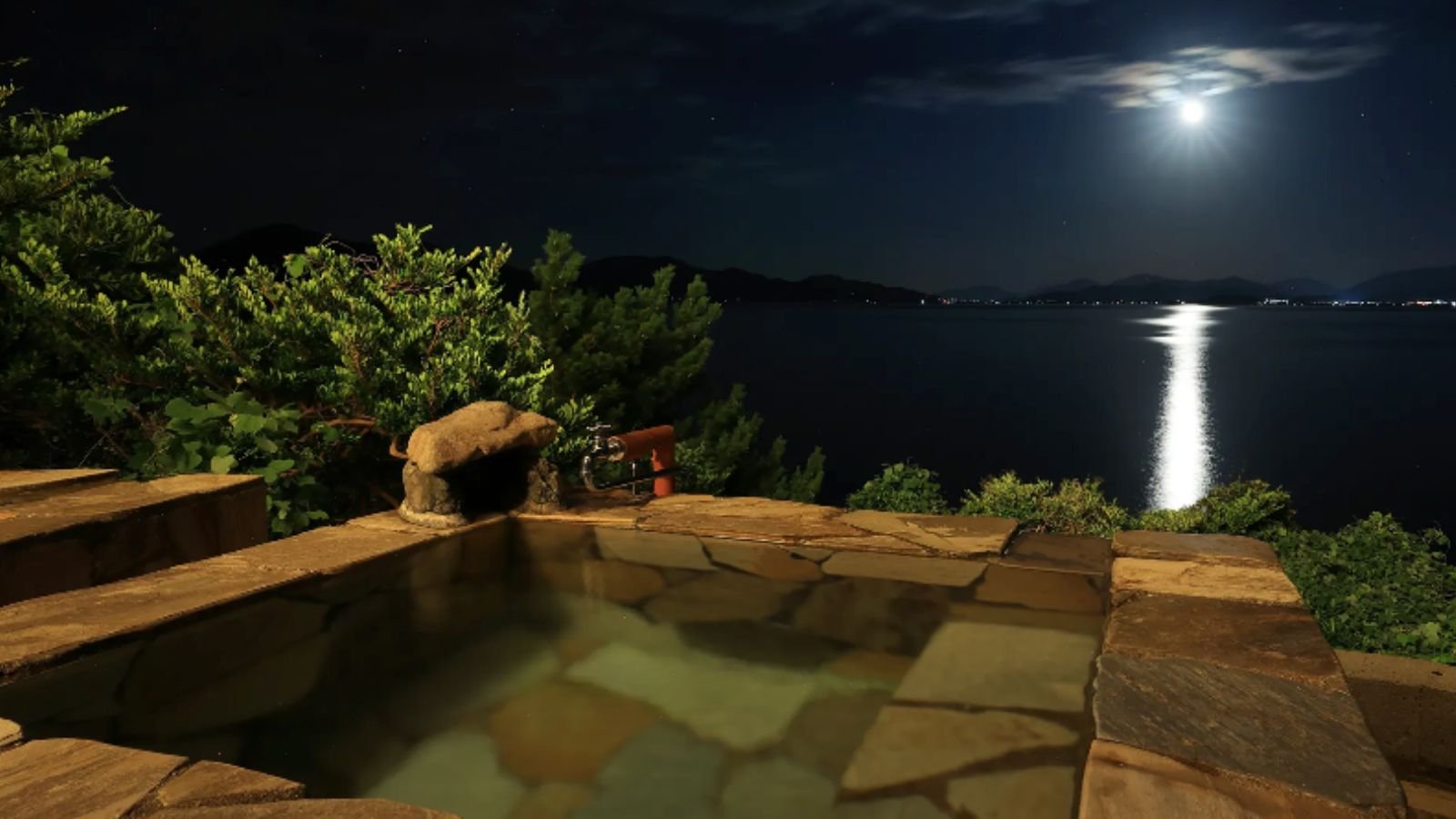
This is what replaces a hotel shower. You won't miss it.
Here's something I've come to believe after years of campervan travel in Japan: the absence of a shower in your van is not a problem. It's actually a feature.
Because instead of a quick rinse in a cubicle, you end every day in a natural hot spring. Mineral-rich water that leaves your skin feeling genuinely different. An outdoor bath under the stars. The kind of thing that, back home, you'd pay a lot for and call it a spa day.
In Japan, it costs ¥800 and is five minutes down the road from where you parked your van.
After a long drive, or a day of hiking, or an afternoon on the MTB trails at Fujimi, soaking in an onsen is not just hygiene — it's recovery. The mineral content in natural spring water has real physical effects: reduced muscle soreness, improved circulation, better sleep. Athletes have known this for years.
I've been ending my days in onsen for over 15 years of campervan travel across Japan. I still look forward to it every single night.
Understanding the Different Types of Japanese Baths
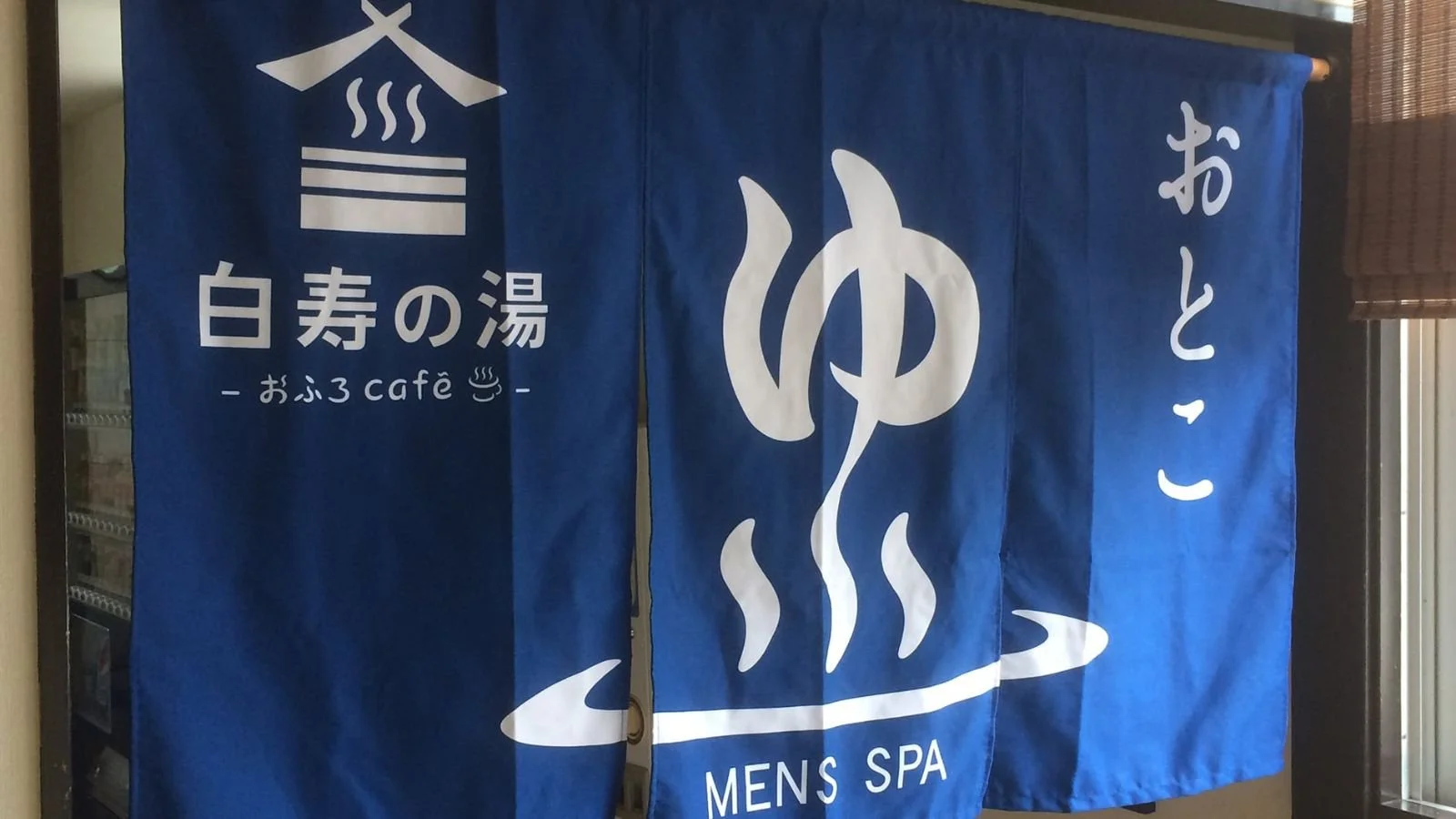
The noren curtain is how you know you've found it. Blue means bath. Step through.
No tattoos? Every option on this list is open to you — Japan has more onsen per square kilometer than almost anywhere on earth.
Morning Bath vs Evening Bath
Most people assume onsen is an evening ritual. And it is — soaking after a long drive with a cold beer waiting in the van is one of life's genuinely great experiences.
But here's what nobody tells you: the morning bath is often better.
Most onsen close around 8:30–9:00pm. If you're having a long dinner or lose track of time, you've missed it — no problem. The same onsen opens again the next morning, usually around 10:00–11:00am.
What I do on a good morning: wake up, go for a run or a hike, then walk straight into the onsen. The hot water hits completely differently when your body is already warm from exercise. Your muscles open up immediately. And at that hour, you'll almost always have the place to yourself.
Evening onsen is about unwinding. Morning onsen after exercise is about resetting. Both are worth experiencing — but if you've never done a post-hike morning soak in an empty outdoor pool with mountain air coming in, put it on the list.
The Coin Laundry + Onsen Combo
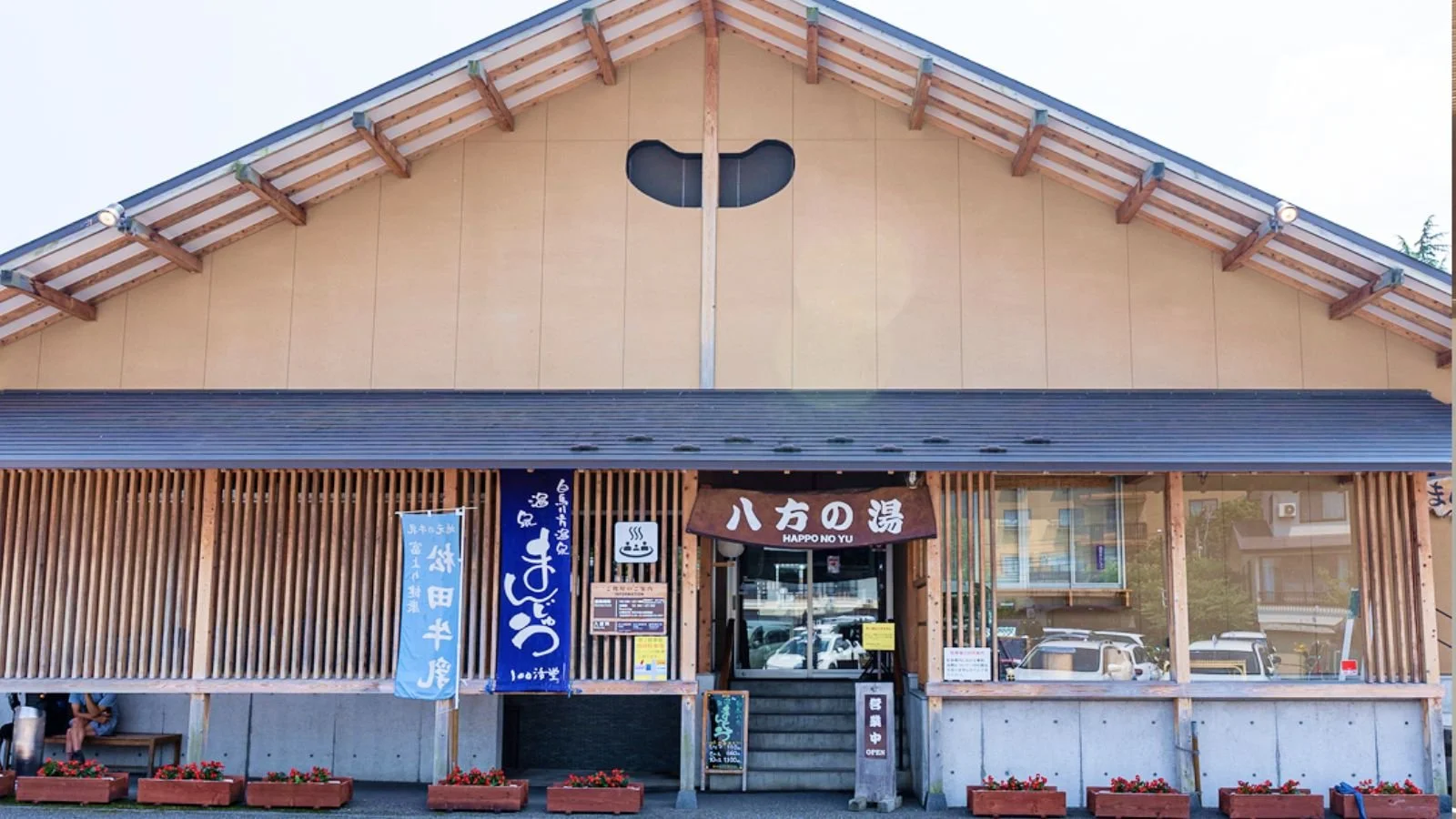
Drop your laundry at the coin laundry nearby, walk here, soak for an hour. By the time you're done, so is the washing.
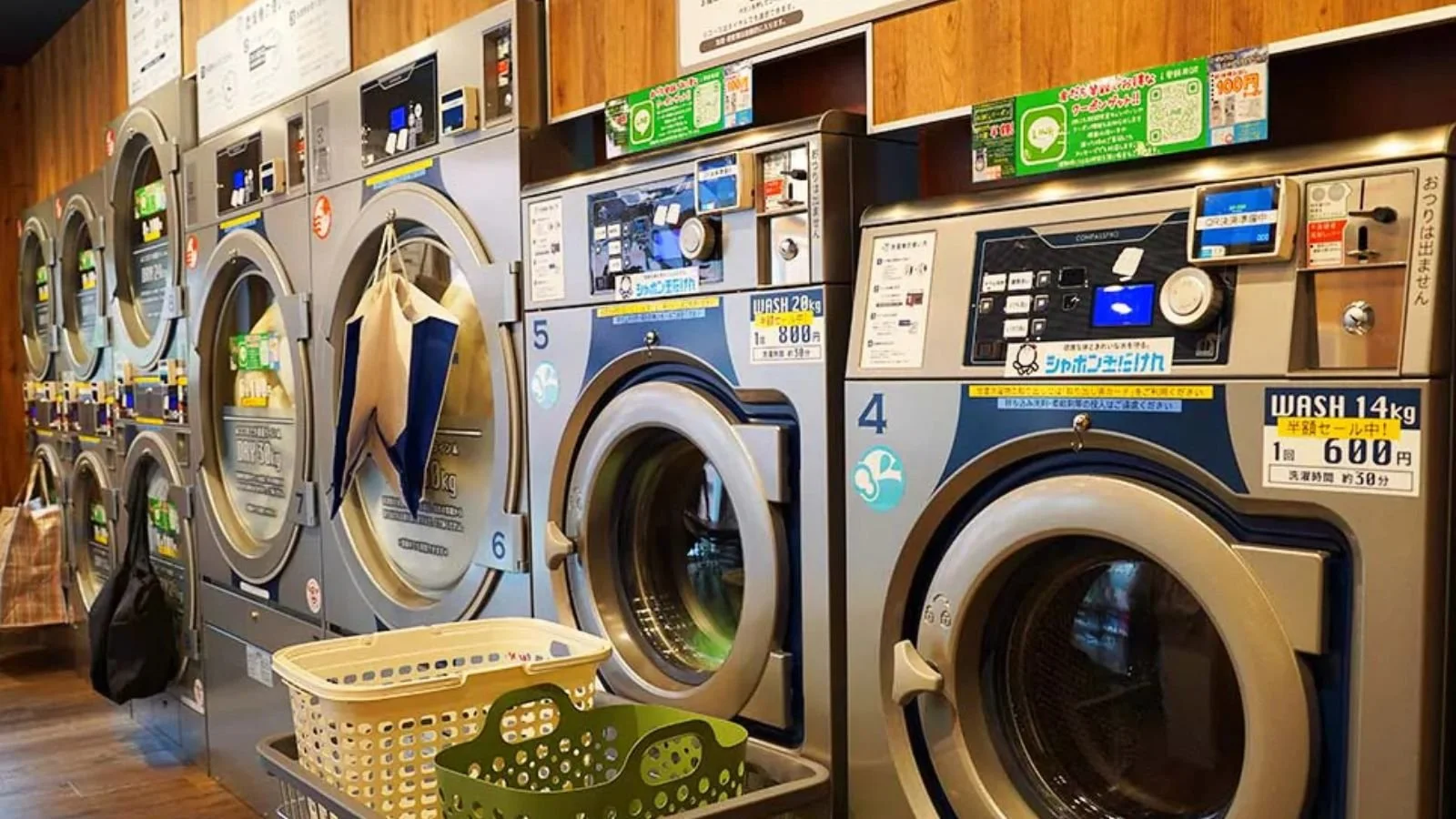
The coin laundry in Hakuba — clean, fast, and five minutes from Happo no Yu. One of the most useful combos on a longer trip.
Here's a practical tip that makes a real difference on longer trips: do your laundry and your onsen at the same time.
In Hakuba, there's a coin laundry directly accessible by car. Drop your clothes in the machine, set the timer, and walk to Happo no Yu (八方の湯) — a tattoo-friendly onsen just minutes away. By the time you've soaked and changed, your laundry is done.
A full wash and dry takes about 60–90 minutes and costs around ¥900. You're not wasting any time — you're doing two things at once. This is especially useful around day 3 or 4 of a longer trip when the laundry situation becomes unavoidable.
📍 Coin Laundry Hakuba: Google Maps →
After the Onsen — The Perfect End to a Campervan Day
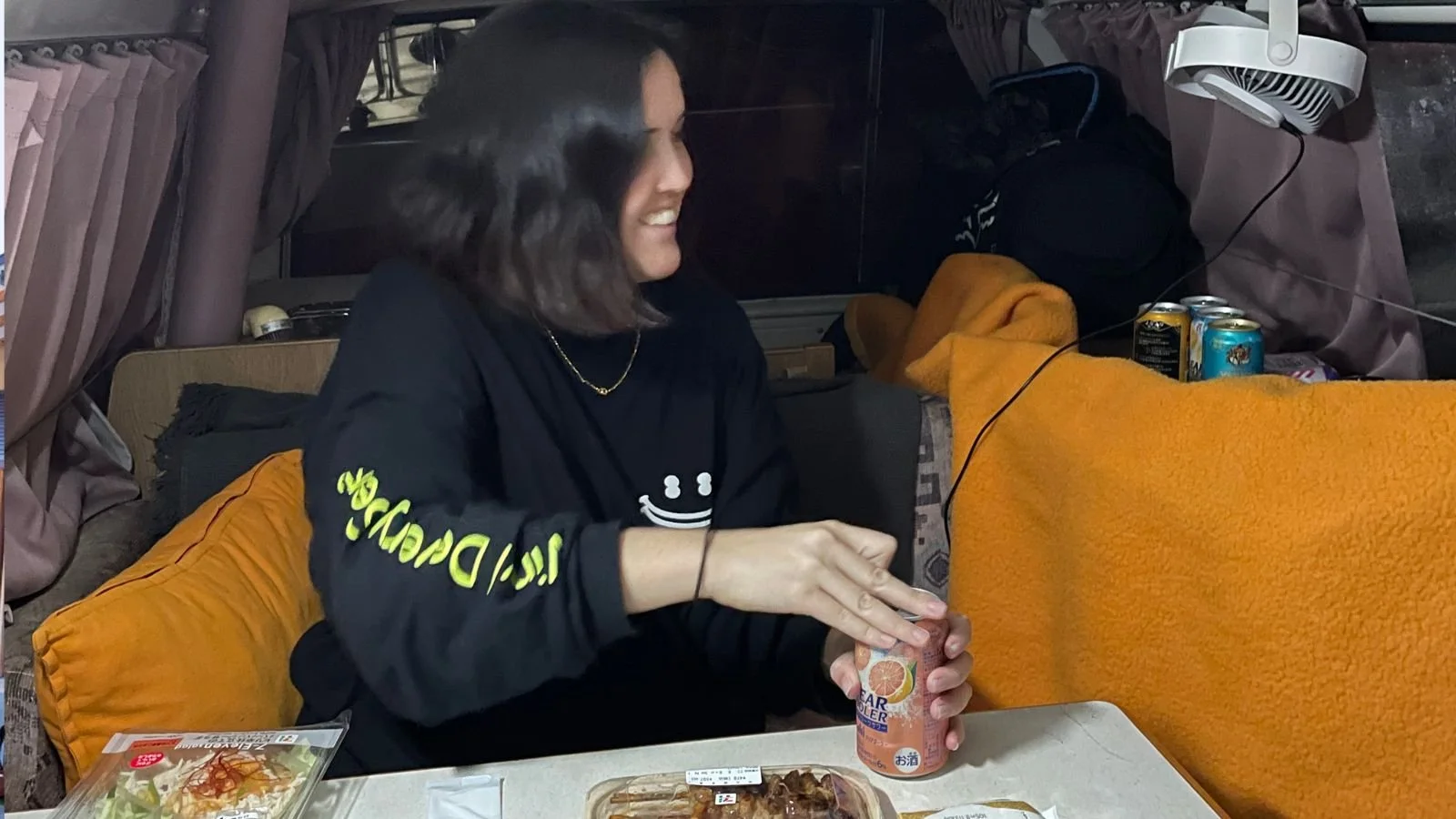
Onsen done. Convenience store stop made. This is the sequence. It never gets old.
You've soaked for 30 minutes in a natural hot spring. Your muscles feel loose. Your skin feels clean in a way that a shower doesn't quite achieve.
Now walk back to the van, stop at the nearest convenience store, and pick up a cold beer.
This is the sequence. Onsen → convenience store → van. It sounds simple because it is. But there's something about the contrast — the heat of the bath, the cold of the beer, the cool air outside — that makes it feel like a reward you've genuinely earned.
Some of the best evenings I've had in Japan have ended exactly like this, in a car park, with nothing to do and nowhere to be.
Tattoo-Friendly Onsen on the Nagano Campervan Route
If you have tattoos, here are verified tattoo-friendly onsen along the Tokyo–Nagano route. Always confirm directly before visiting as policies can change.
🗺 Yamanashi — En Route from Tokyo
📍 山梨県南都留郡富士河口湖町西湖2717
Google Maps → | ¥800 | Hours: 10am–9pm
🗺 Chino / Yatsugatake Area
📍 長野県茅野市金沢2316-1
Google Maps → | ¥600 | Hours: 9am–9pm | Closed Wednesdays
A no-frills local bathhouse on National Route 20 — alkaline spring water, sauna, and water bath. 5 min from Suwa-Minami IC. Beloved by locals, almost zero tourists.
🗺 Hakuba Area
📍 長野県北安曇郡白馬村北城5701-2
Official Site → | ¥800 | Hours: 10am–9pm
Also the coin laundry combo spot — see tip above.
📍 長野県北安曇郡白馬村北城9346-1
Official Site → | ¥800 | Hours: 10am–9pm
📍 長野県北安曇郡白馬村北城5480-1
Google Maps → | ¥800 | Hours: 10am–9pm
🗺 Suwa Area
📍 長野県諏訪郡下諏訪町3306
Details & Booking → | ¥4,000+ | Hours: 11am–3pm (last entry 2pm) | Reservation required: 0266-27-5011
* Policies can change — always confirm directly before visiting. For a full searchable database: tattoo-ja.com
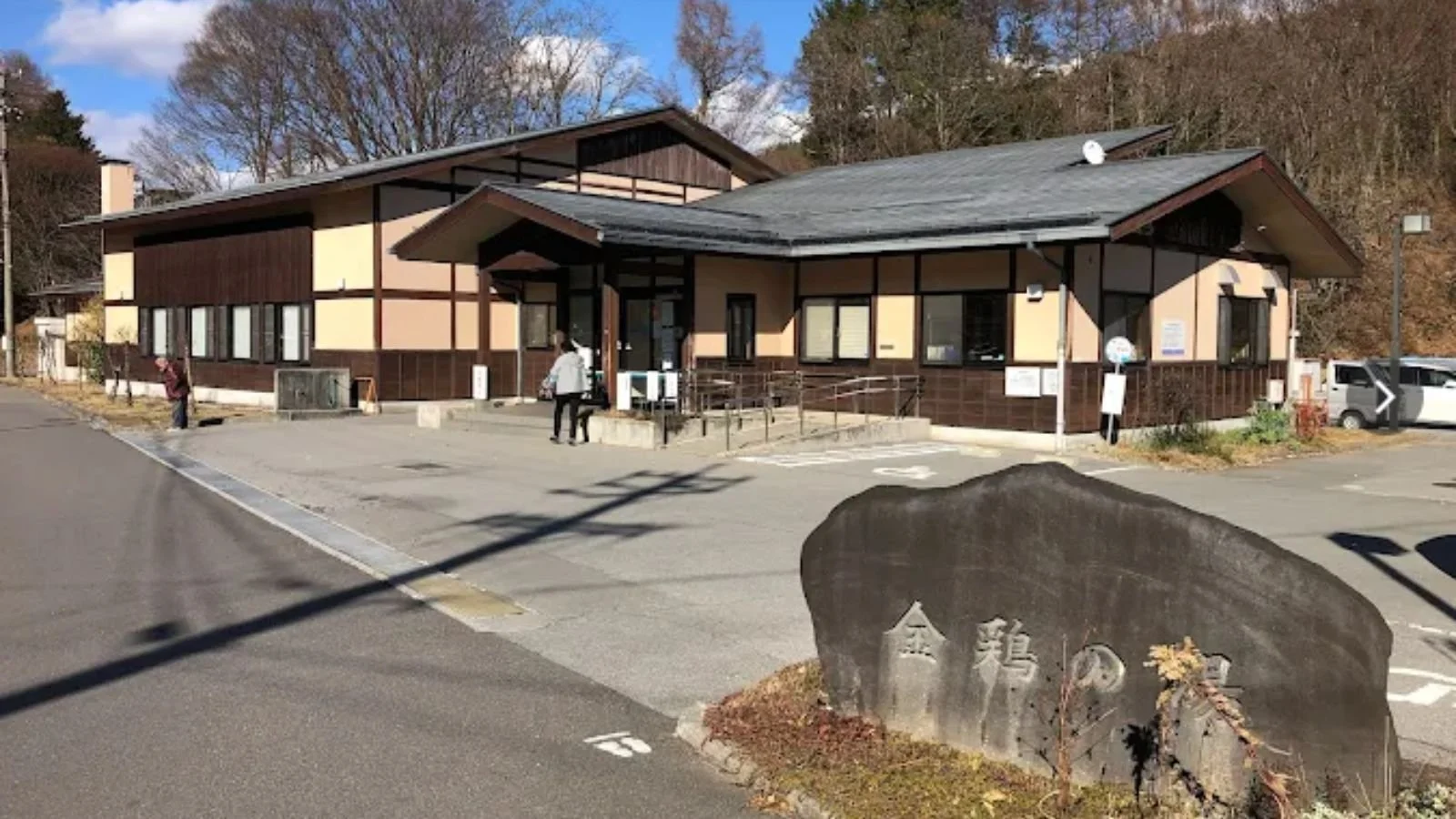
Kanazawa Onsen Kinkei no Yu — a local favourite in Chino, five minutes from the expressway. ¥600 and almost zero tourists.
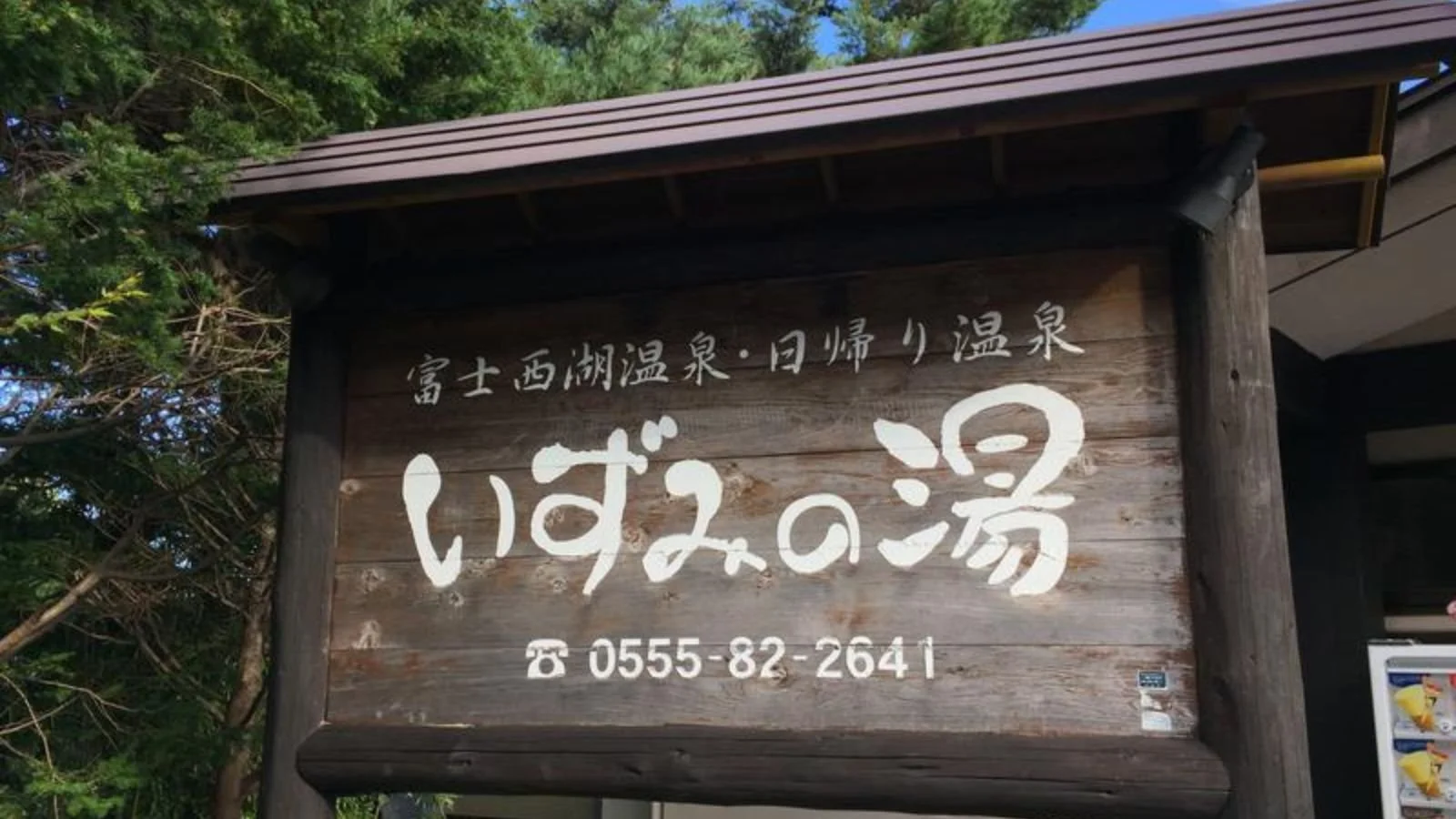
Fuji Nishiko Onsen Izumi no Yu — tattoo-friendly between 2pm and 5pm daily. Worth timing your drive around it.
The Ultimate Onsen Experience — Hiking to Japan's Highest Wild Hot Spring
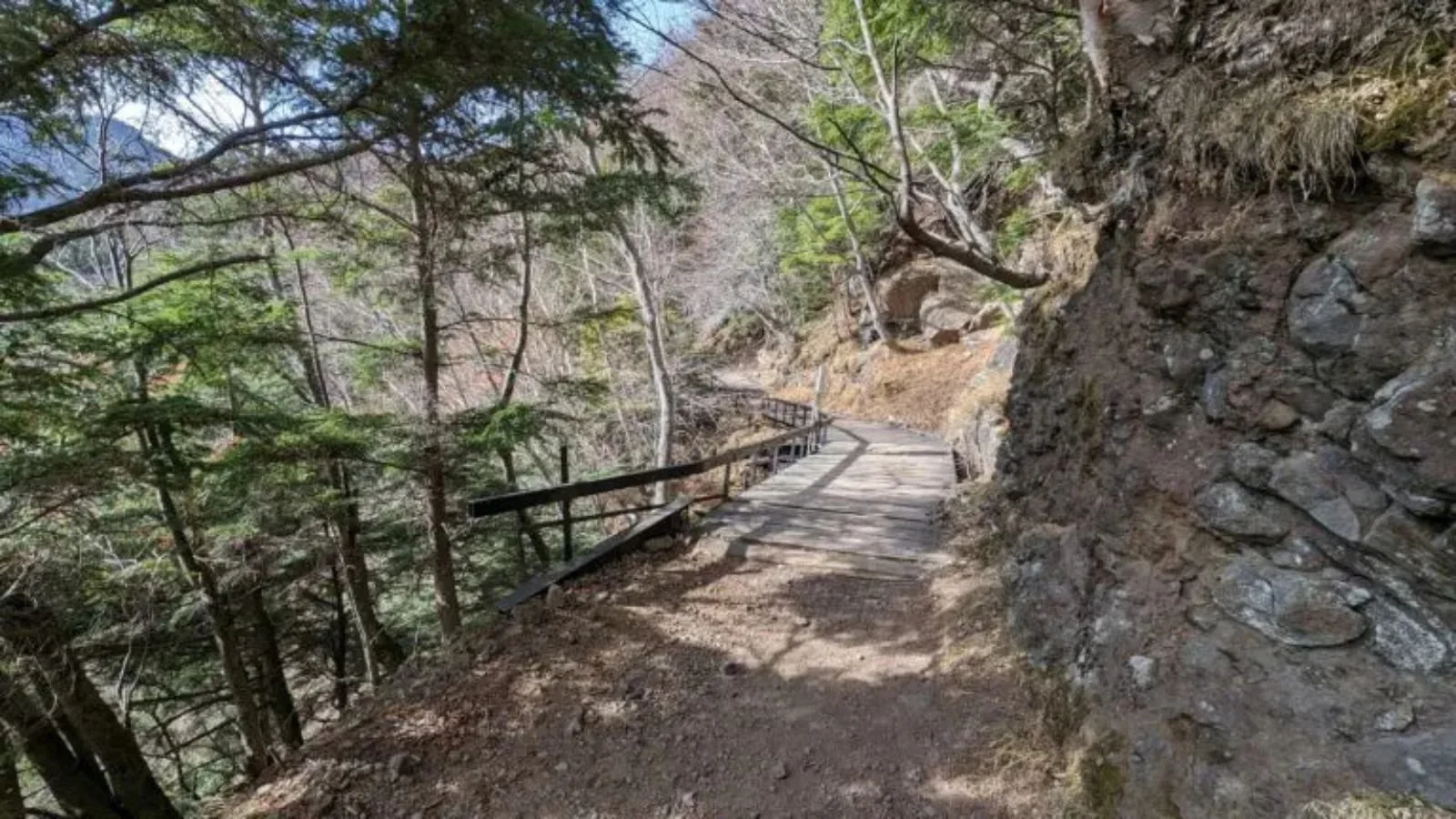
The trail to Honzawa Onsen — about 2 hours from the car park. Gentle gradient, deep forest, and a wild hot spring waiting at the end.
This is the one that stays with you.
Honzawa Onsen (本沢温泉) in the Yatsugatake mountains is home to Japan's highest altitude outdoor hot spring — the Unjo no Yu (雲上の湯), or "Bath Above the Clouds" — sitting at 2,150 meters above sea level.
Getting there is part of the experience.
How to access by campervan: Drive the Chuo Expressway to Kobuchisawa IC or Nagasaka IC, then take National Route 141 north toward Matsuhara Lake. Turn onto Prefectural Road 480 toward Inagoya Onsen, then follow signs for Honzawa Forest Road. There's a small car park at the trailhead with space for several vehicles.
The hike: From the car park, it's approximately 40 minutes to the gate and another 90 minutes to the hot spring — around 2 hours total on a well-maintained, gentle forest trail. The gradient is easy throughout, making it accessible for beginners. Proper footwear and layers are recommended regardless of season.
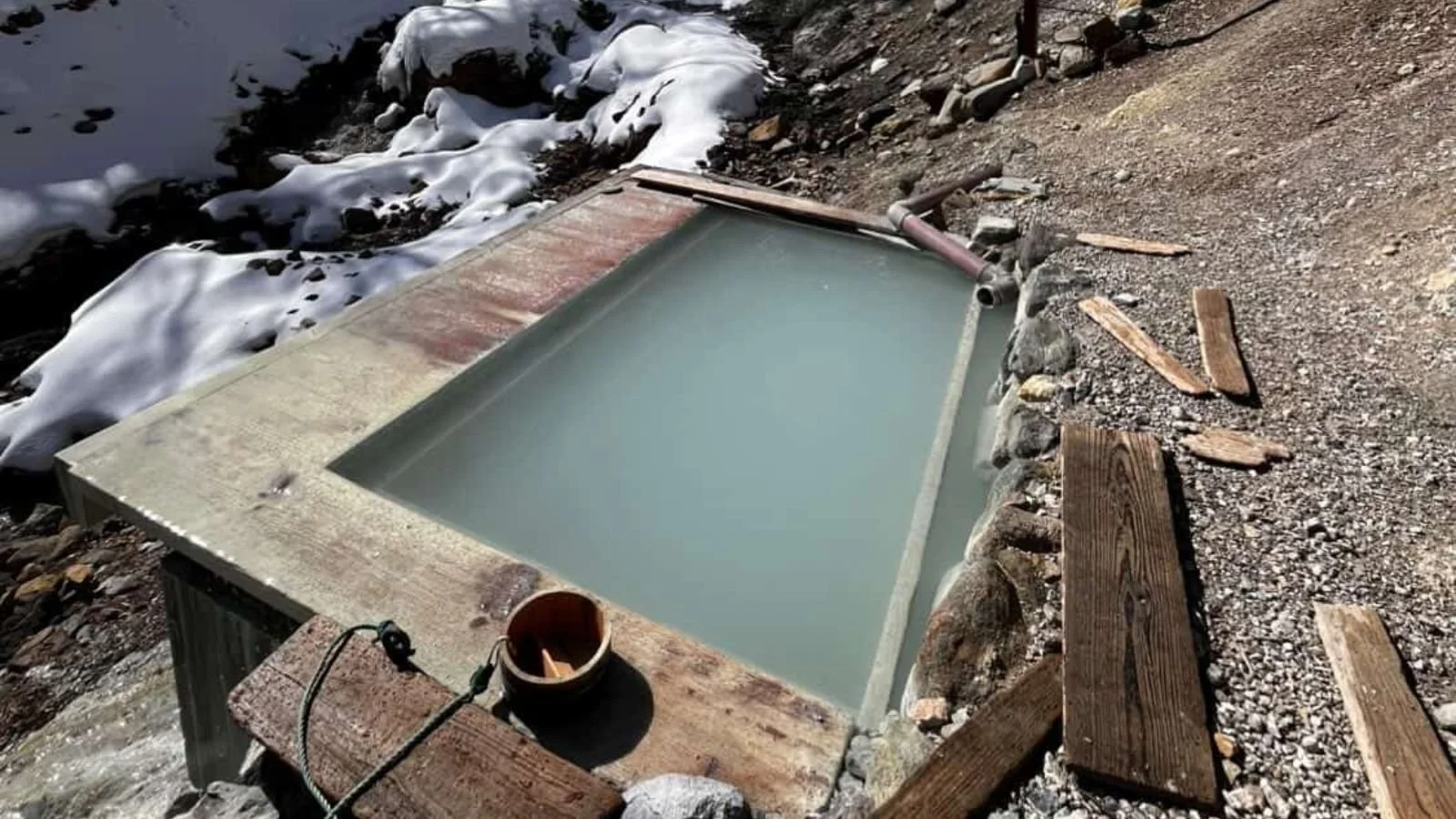
Japan's highest outdoor hot spring at 2,150 meters. The sign says it all. I've never forgotten the first time I soaked here.
The hot spring:
Unjo no Yu (outdoor): ¥600. Natural sulphuric water, mixed bathing — women can enter with a towel or swimwear.
Kokeomo no Yu (indoor): ¥800. Separate male/female baths inside the mountain hut.
The outdoor bath sits in a rocky mountain valley at 2,150m with nothing above you but sky. Temperature typically around 42°C, cooler after rain.
Park your van at the trailhead the night before. Hike in the morning. Soak at 2,150 meters. Hike back. Drive to the next spot. That's a day that's hard to beat anywhere in the world.
Onsen Etiquette for First-Timers
Japanese onsen have a few rules worth knowing before you arrive. They're simple — just different from what most visitors expect.
Before you enter the bath:
Wash your entire body thoroughly at the shower stations before getting into the shared bath. This is the most important rule.
Rinse completely — no trace of shampoo or soap.
In the bath:
Keep your towel out of the water. Place it on your head or leave it on the edge — never submerged.
Enter quietly. Onsen are calm spaces. Low conversation is fine; phone calls are not.
Don't wear swimwear in traditional onsen — it's considered unclean. Private onsen and some Super Sento have different rules.
General:
Most onsen require full undress. This surprises some visitors but is standard practice.
If you have any open wounds or skin conditions, check the facility's guidelines before entering.
That's genuinely all there is to it. Once you've done it once, it feels completely natural.
FAQ
Q: Can I use onsen if I have tattoos in Japan? It depends on the facility. Traditional natural onsen often restrict tattoos, while Super Sento, Sento, and private onsen are generally more open. The safest options are private rental baths (貸切風呂) — always 100% OK regardless of tattoos. Check the list above for verified tattoo-friendly spots along the Nagano route.
Q: What is the difference between onsen and sento? Onsen use natural hot spring water from the ground, rich in minerals. Sento are traditional public bathhouses that heat regular tap water. Onsen are typically found in mountainous or volcanic areas; sento are common in cities. Both involve communal bathing and similar etiquette.
Q: How much does onsen cost per day on a campervan trip? Budget ¥600–¥1,500 per person per soak. On a typical day, one visit is plenty. Over a 7-day trip for two people, expect to spend around ¥8,000–¥20,000 on bathing — comparable to a single hotel spa day at home.
Q: Is there a private onsen option for couples? Yes — 貸切風呂 (private rental baths) are available at many facilities. You rent the entire bath for 45–60 minutes, just the two of you. Gingetsu in Shimosuwa is a great option on the Nagano route. Cost is typically ¥4,000–¥5,000.
Q: What time do onsen open and close in Japan? Most open around 10:00–11:00am and close around 8:30–9:00pm. Roadside station onsen sometimes close earlier. Always check before you arrive — and if you miss the evening session, the morning bath is often better anyway.
Ready to Plan Your Trip?
Japan doesn't have a shower problem. It has the best bathing culture in the world — and a campervan is the best way to experience it.